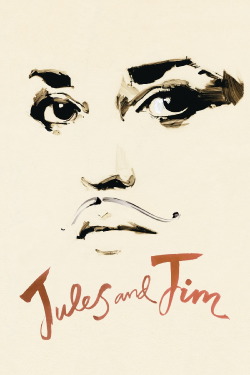
Review of Jules and Jim (1962) by Blake P — 12 May 2013
Ah, the French New Wave. And poor "Jules et Jim"-- it's probably the best film of the period and Godard's "A bout de Souffle" gets all the credit for being the big one. I love the latter, but it doesn't have that total magic that "Jules et Jim" offers, and it doesn't feel the same the second time like this film does.
François Truffaut is my personal favorite French director, and this is certainly one of his best films. Jules (Oskar Werner) and Jim (Henri Serre) are fast friends in 1912, traveling the streets together and having mini-adventures to pass the time.
Their relationship is rocked quickly when the charismatic and outgoing Catherine (Jeanne Moreau) becomes a part of their lives, working as a sort of love object and temptress. Eventually, Jules is the one that gets the girl, but it isn't happy for long.
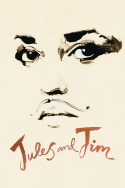
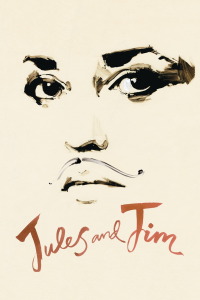
The war separates the three friends for a period of time, and once they're reunited, Jules and Catherine are married, with a young daughter. Jim has shaved his cartoonish mustache, and sports a more mature outlook that suits him better.
The two men have aged, and their friendship seems more trusting than ever, but Catherine, who inside is still the the inconsiderate, unstable woman, desperately wants Jim's affection once again. He knows it's completely the wrong decision-- after all, she cheated on her own husband multiple times-- so he doesn't take the opportunity.
But Catherine isn't the kind to just "let things go". "Jules et Jim" moves along with the frenetic energy of a silent movie. Something is always happening, and the characters are either animated, and if not, capture the look of a '20s film star.
Serre especially, has the awkward lankiness that fits perfectly to be a comedic actor, whereas Werner is his foil. The film isn't really funny, and neither are its characters, but there's something in the relationship that's somewhat exciting and reminiscent of a comedian with the best sidekick in then world.
As the film gets darker, the friendship takes a downward turn that is undoubtably a little bit sad. The friendship at first seems solid and friendly, and quickly it turns into something much worse. In the second half of the film, one is left to wonder-- is Jim really that selfish of a friend, or is it Catherine that's turning him into a jerk? I'll pick the latter, but some won't think so.
People trying to look too deep might misinterpret the dissolving as artificiality, but truly it shows how much simply "growing up" can change a person. Then Truffaut turns the tables once again and the plot is twisted right under our noses.
In the meantime, the technical aspects, especially the voiceover, are highly important to the new wave. While it shouldn't work, the voiceover makes the period setting feel just as chic as '60s France itself, all the while maintaining to give "Jules et Jim" a light touch of experiment and total modernization.
Voiceovers were mostly used in America in hard-boiled film noir, but Truffaut uses it as though he's trying to prove everyone wrong. It, if anything, makes the film even better. It's a huge component.
The setting is set between 1912 and 1933, but Truffaut, unlike most directors, isn't as concerned about the costumes or the set pieces. He knows this is a character piece, and the focus goes on the trio.
The filming style is certainly dreamy, and the editing is artistic beyond belief, but not once can we take our eyes off of Jules, Jim and Catherine. This is certainly one of the best casts in a film, even though there is so few.
Truffaut's direction is masterful, and sets the standard of modern filmmaking completely. He throws away the conventions of directing that the '60s brought on and shapes it into a statue of a film that's incredibly appealing.
It shines almost with the feeling of a "new car", even though it's 50 years old. "Jules et Jim" is almost exciting to watch because, while it's entertaining like a film should be, it's also artistically fascinating without being pretentious.
Truffaut is a better version of Godard, one that can make a film pop all the while maintaining a fascinating story. The men who play Jules and Jim aren't the "actor" types like Alain Delon or Jean-Paul Belmondo (even though they're both important to the French New Wave), and are instead portrayed by Oskar Werner and Henri Serre, more average looking and relatable.
They're portrayals are simple, likable and subtle, but the fact that they aren't so good-looking make femme fatale Jeanne Moreau all the more appealing. Moreau is certainly the most talented (and most memorable) of all the French New Wave.
The other important actress of the era, Anna Karina, always managed to look cool and mysterious, but never did much otherwise. Moreau on the other hand constantly gave terrific performances and almost always stole the film from everyone else.
She has a look that's totally distinct and unique, and a voice that rings with sweetness but can deliver bit. Moreau is the archetypal French actress; while she's beautiful, she has the elegance and range to pull off any role.
"Jules et Jim" might be her most intriguing role. She is the focal point of the film, even if she isn't a titular character. There isn't a second where we don't believe she isn't a seductress, but there also isn't a minute we don't like her.
She's to enigmatic for that. Catherine is a character unlike any other, and Moreau is probably the only one that could have pulled it off so well-- Catherine obviously has a few mental troubles, but Moreau doesn't once overdo it.
"Jules et Jim" is obviously a film I could go on and on about. The point is-- see it. This is the definition of what an important film is, and there isn't one doubt in my mind about that statement.
This review of Jules and Jim (1962) was written by Blake P on 12 May 2013.
Jules and Jim has generally received very positive reviews.
Was this review helpful?