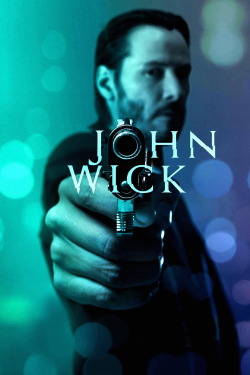
Review of John Wick (2014) by Gerardistheway — 07 Feb 2017
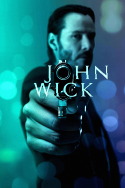
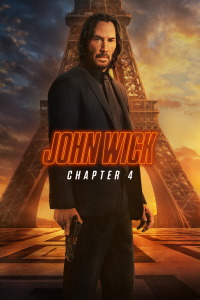
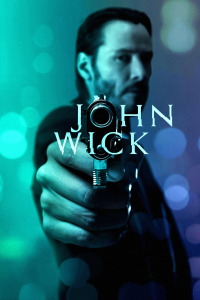
Keanu Reeves is a solid actor, and it was therefore disheartening to watch his career slip away into flop after flop following his starring turn as Neo in the Matrix movies (the latter two of which weren’t so good, by the way). That’s why it was such a delightful surprise to me that "John Wick" returned him to bold, stylistically bloody form in the title role.
As Wick, Reeves plays a hitman struggling to overcome the recent, unexpected death of his wife (Bridget Moynahan) when he receives a puppy as a last gift from her to give him something to love and someone to grieve with. Unfortunately, while out with the dog he runs afoul of a Russian gangster, Iosef (Alfie Allen), to whom he refuses to sell his vintage Mustang, and that night the criminal and a few of his cronies break into his house, beat Wick savagely, steal his car, and kill the dog. This was a bad move, as we later learn from Viggo, the head of the New York branch of the Russian mafia (Michael Nyqvist) who is also John’s former employer and Iosef’s father: years ago Wick was a hitman of legendary status in the criminal underworld who, in an attempt to get out of the life and be able to marry his wife, eliminated all of Viggo’s “business” rivals in a single night. The rest of the movie plays out in relatively straightforward fashion, as a cat-and-mouse neo-noir action thriller with Wick trying to get revenge on Iosef while Viggo tries to protect his son and eliminate his former friend at the same time, but it’s the style with which the proceedings are conducted that set it apart from other movies of its kind.
John Wick was directed by Chad Stahelski and David Leitch, former stuntmen (Stahelski was a stand-in for Brandon Lee in "The Crow" following his accidental death, as well as Reeves in "The Matrix", and Leitch has doubled for both Brad Pitt and Matt Damon) who have an eye for action sequences. Whereas in many action films these days shaky and choppy camera work is relied on to give a frenetic feeling to the battle (and unintentionally giving people vertigo in the process), the exact same effect is achieved here with clean cinematography that tracks Wick in continuous shots (or they at least feel continuous) as he guns down enemy after enemy with effortless grace. There is a clear sense of who everyone is, where they are and why they are there in each shot, which is a big help to the audience by way of not inducing a headache in forcing them to figure it out for themselves. In addition to this, cameraman Jonathan Sela does interesting things with lighting, weather, and mood: in typical noir fashion many of the scenes are drab and gloomy, almost black-and-white from their dull color palettes, but it is interesting in which scenes this is prominently feature. Wick’s life outside of his criminal past is where things are more cut-and-dry in terms of color, but when he returns to the life of an assassin suddenly there are bright neon lights, blood-red dress shirts, and intricate tattoos aplenty (there’s also the unforgettable thump and whine of Marilyn Manson’s zombified blues-rocker “Killing Strangers” hanging over a number of scenes). This could be interpreted in any number of ways—it could be that John is more alive when he is embroiled in the criminal world and that he was denying who he was, or it could have been just to create a contrast between the two. I will say this, however: the life of a hitman seems far more lively than the life of a civilian in the film.
I keep referring to Keanu Reeves as John Wick because, in a sense, he is John Wick. The role is an amalgamation of many of his past roles: the one-liners of Ted Logan ("Bill and Ted’s Excellent Adventure"), the determination of Johnny Utah ("Point Break"), and the reluctance of Neo to be a part of a world he was unsure about ("The Matrix") stand out as the most obvious influences. Wick, like Reeves and his other characters, rarely grows visibly angry, frustrated or upset, and his supreme calm at all times makes him even more threatening when he’s wiping out half of New York single-handedly, as well as even funnier during the deadpan delivery of lines maybe not even intended to be humorous.
Lots in this movie is left unexplained when first introduced, including the supporting characters (which include Willem Dafoe as John’s mentor, Ian McShane as the mysterious operator of a downtown hotel catering exclusively to assassins, Adrienne Palicki as a fellow assassin who could’ve been a Xenia Onatopp-style Bond girl in another life, John Leguizamo as a chop shop owner and Lance Reddick as the concierge of the aforementioned hotel who seems to possess an uncanny sense of what the customer wants/needs), and what isn’t elucidated by the end is deliberately left open to interpretation or further elaboration in the next film. I’m looking forward to seeing the explanation behind the gold coins they use to pay for favors and services.
This review of John Wick (2014) was written by Gerardistheway on 07 Feb 2017.
John Wick has generally received very positive reviews.
Was this review helpful?