Review of Joe Strummer: The Future Is Unwritten (2007) by Karen F — 07 Nov 2007
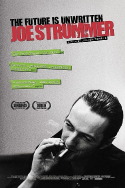
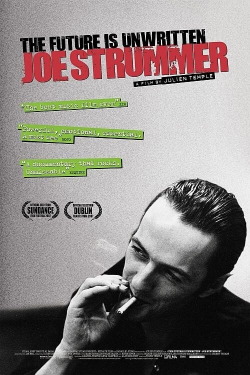
The late John Graham Mellor, better known as Joe Strummer, co-founder, guitarist, singer, and lead songwriter for seminal punk rock group The Clash, is the subject of filmmaker Julien Temple?s ([[i]The Filth and the Fury[/i], i]Earth Girls Are Easy[/i], [i]Absolute Beginners[/i], [i]The Great Rock 'n' Roll Swindle[/i]) bio-documentary, [i]Joe Strummer: The Future Is Unwritten[/i]. By turns fascinating, engrossing, enlightening, and frustrating, [i]Joe Strummer: The Future Is Unwritten[/i] is a must-see documentary for fans of The Clash, Joe Strummer, or anyone interested in the punk- and post-punk eras. Even if you don?t fall into either group, [i]Joe Strummer: The Future Is Unwritten[/i] offers a flaws and all portrait of a talented musician who saw what he did as a conduit for social, cultural, and political change.
Temple begins [i]Joe Strummer: The Future Is Unwritten[/i] with Strummer?s early days as a member of The Clash, black-and-white footage of Strummer singing the opening bars of ?White Riot? in a sound booth without musical accompaniment. Seconds later, the familiar guitars and drums enter the soundtrack. Strummer is already an angry young man, spitting his words, hoping to transform the world through punk rock. As compelling as this footage is, Temple almost immediately reverses course to reveal Strummer?s past. Born in Turkey to a British diplomat, Strummer moved with his family to Cairo, Mexico City, and West Germany before his parents sent him to a boarding school in England. A mediocre student and unwilling to follow his father?s footsteps into respectability, Strummer eventually chose to go to art school. That didn?t last long.
Strummer scraped out a meager living as a busker. His first band, the 101?ers, a rockabilly-influenced outfit, was named for the street address where he and his band mates squatted. After seeing the Sex Pistols in concert, Strummer saw the musical future, punk rock. Pulled out of the 101?ers by Bernie Rhodes, a music impresario eager to capitalize on the Sex Pistols sound, Strummer joined up with another talented musician, Mick Jones. Months of rehearsals, music writing, performing, and finally, recording following. The Clash?s first album, made them the voice of a music and cultural movement. As commercial success followed, The Clash expanded their sound by incorporating ska, reggae, and dub. The politically charged lyrics never went away, however, culminating in a double-sided album, ?Sandinista Clash? that their record label promoted reluctantly.
The Clash suffered a fate common to many rock bands, great and small (e.g., inflated egos, disagreements over the direction of the band, friendships frayed by constant touring, and substance and alcohol abuse). In 1983, Strummer and Rhodes summarily removed Jones from the band. While Strummer juggled lineups, continued touring under The Clash name, and recorded a new album, The Clash effectively died with Jones? departure. Jones went on to commercial success with his new band, Big Audio Dynamite. Strummer spent the next eleven years contributing scores and songs to several films, acting in several others, and recording an album with a new band that wasn?t well received. Moderate success followed with Strummer?s subsequent band, the Mescaleros. Jones joined Strummer onstage at a benefit concert four weeks before Strummer?s death on December 22, 2002. Strummer was fifty when he died.
With access to Strummer?s family, friends, acquaintances, and former band mates (minus Clash bassist Paul Simonon), as well as archival footage and audio interviews with Strummer used as voice over narration, Temple had everything he needed to put together an insightful portrait of Strummer, which Temple duly provides. That?s all to the good, but Temple?s decision to clutter his documentary with celebrity interviews seems dubious at best and self-indulgent at worst. Bono, Matt Dillon, John Cusack, and Johnny Depp are on hand to offer up their admiration for The Clash and Strummer. Also on hand are Steve Buscemi and Jim Jarmusch, but at least they discuss working with Strummer during his brief foray into acting in the late 1980s. Even more oddly, Temple identifies his interview subjects via superimposed titles, but doesn?t bother to tell us who they are and what their relationship to Strummer was.
Like Strummer, Temple?s documentary has its flaws, but those flaws can be easily forgiven, if for no other reason that [i]Joe Strummer: The Future Is Unwritten[/i] contains a healthy abundance of The Clash and Strummer footage, some of it rarely or never seen before. For that reason alone, Temple deserves a nod of appreciation from Clash fans everywhere.
This review of Joe Strummer: The Future Is Unwritten (2007) was written by Karen F on 07 Nov 2007.
Joe Strummer: The Future Is Unwritten has generally received very positive reviews.
Was this review helpful?