Review of Joe (2002) by Kris W — 28 Jul 2010
Known for crowd-pleasing stories with definite heroes, underdogs overcoming odds and surrogate fathers, it's ironic that John G. Avildsen's breakthrough came with a film that asks the kind of questions that mainstream film wouldn't ask for awhile yet about the impartial portrayal of racists, junkies and gritty urban living. And it does only ask these questions. It doesn't answer much. Its over-the-top climax is a taut little shocker that eschews winding down for a gaping stunned gaze on your face, but as much as it leaves you pondering where the characters all went wrong, the scenes leading up to it don't quite seem to have led there without major, sudden contrivance.
The death of an insignificant, drug-dealing junkie loser would be less than probable to be headlined on an NYC TV news program, let alone front page news in an NYC newspaper. Yet because these implausible things implicitly happen, Joe (played stunningly by Peter Boyle), while ranting in a bar, overhears and somehow recalls the name of another customer who fleetingly and facetiously says he's killed a hippie. Days later, Joe not only remembers the man's very general name but is able to track him down, apparently since he's the only person of the name Bill Compton listed in the whole phonebook for a city of several million people. Nevertheless, this movie wants you to think about the implications of its dialogue, the contrast between two men of different classes, and mainly the war between generational values. It's the kind of movie that gets articles written about its perceived commentary on its time, and works as a time capsule for audiences of my generation, forty years later.
The film's credited with birthing the "vigilante film," wherein characters violate the law to exact justice, rooted in 1970s anxiety toward government corruption, failure in Vietnam, increased crime. These movies point toward the climbing political orientation of neo-conservatism, men who believe good and evil to be cut-and-dried and legal bureaucracy to be elite nutlessness, so they play judge, jury and executioner. Joe and Bill are two of these sorts, but their crusade is not by any means lionized. Their holy war against the counterculture scene catches them off-guard, such as when they make love with some hippie girls, where we see body shame equated with older, more purist generations and upper classes, and the other extreme of exhibitionism seen as social equality. Yet no young character trusts or even likes any older character, and vice versa.
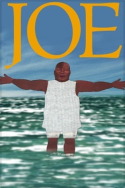
The American flag on the poster art of this film indeed deserves higher billing than the main cast, because more than a portrait of Joe or Bill, the movie's a bleak silhouette of the country, at odds with itself, its famous Dream turned sour. This is an inherently fascinating concept. Avildsen would return to it just a few years later in his masterpiece Save the Tiger, which would swing for the bleachers. Here, however, he and writer Norman Wexler seem more concerned with their heavy dependence on sensationalist advertising and broad, lurid overstatement of theme, despite the intrinsic quality of their film. There's so much more about the '60s, '70s generational gap that goes untapped here---Molotov cocktails and sniper fire in response to multicultural textbook curriculums, racial integration in its infancy, homosexuality still considered a mental illness---instead merely concerning older traditional fuddy-duds and younger radical stoners with their dispositions towards sex, drugs and violence.
I thought I'd appreciate this movie immensely. Save the Tiger firmly grasped the perceived moral dilemmas of the era, punctured stereotypes that clenched many into angles where they couldn't---still can't---comprehend the people with whom they share their society, or truly grasp the dichotomies that make up the layers of daily life. Joe seems to be even more about such things than that film. Instead, I found its moments of violence, at the beginning and end, to be done with a mawkishly exploitative edge with superfluous percussion-driven music and repetitive editing undercutting the impact. I found myself admiring the occasional scene of dialogue but finding most of them hard to buy, especially those where Bill takes Joe through his upper-crust world to show him how fake his peers are.
Nevertheless, resulting from the national media coverage of the Stonehead Manor murders that inspired its climax, Joe snagged a Straight From The Headlines asset upon release. Without the murders, it's unlikely that this low-budget exploitation film would've found a wide audience, which instead it did, earning millions in domestic receipts. Furthermore, it's likely that the similarities between the real-life murders and the movie's dog-eared premise inspired the Academy to nominate Wexler's passable screenplay for an Oscar. It's also likely that the wider audiences helped launch newcomers Avildsen, Boyle and Sarandon. And that's not such a bad thing.
This review of Joe (2002) was written by Kris W on 28 Jul 2010.
Joe has generally received positive reviews.
Was this review helpful?