Review of Jaws (1975) by Allan C — 05 Jul 2017
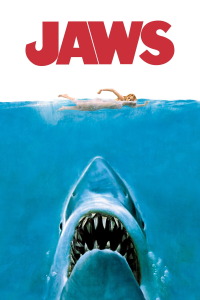
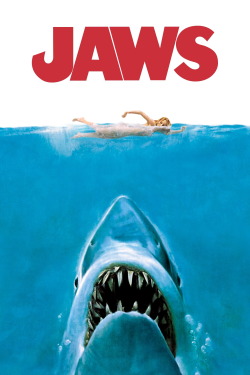
Steven Spielberg's classic film about a giant shark terrorizing a small New England resort community is masterful entertainment and also (along with "Star Wars") ushered in the age of the blockbuster film, essentially ending major studio support of smaller edgier films of the 1960s and 70s. I recently listened to an interview with Roger Corman, the prolific low budget exploration filmmaker, who noted that after he saw "Jaws" he said to himself that he's in trouble because the majors figured out what he'd know for years, in terms of what audiences wanted to see, and did it much better. An argument could pretty easily be made that this is the greatest nature-gone-wild movie ever made. "Jaws" truly is a great film, but when most of it's competition was the the likes of "Frogs" (about a deadly hoards of frogs) or "Them" (about giant radioactive ants) or "Night of the Lepus" (about giant killer rabbits), it shouldn't be much of a surprise "Jaws" wins out (okay, Hitchcock's "The Birds" is a pretty excellent nature-gone-wild film, but "Jaws" is still better). But back to "Jaws," this is the film that put Spielberg on the map. Up to this point he'd mostly done television and had one film under his belt, the fine "Sugarland Express," but "Jaws" is a popcorn movie of the first order. Roy Scheider is the Chief of Police for the sleepy beach community of Amity Island when he's confronted with a likely shark attack at the outset of tourist season. Murray Hamilton is great in a supporting role as the mayor who won't let Chief Brody shut down the beaches, that is until a horrific attack in front of legions of beachgoers. At that point Brody is authorized to enlist the help of young shark expert Matt Hooper (Richard Dreyfuss) and crusty shark hunter Quint (Robert Shaw). Brody, Hooper, and Quint are a wonderful trio of contrasts aboard Quint's ship as they hunt the giant great white shark. One early exchange between Hooper and Quint quickly sums up their relationship:
Quint: You have city hands, Mr. Hooper. You been countin' money all your life.
Hooper: All right, all right. Hey, I don't need this... I don't need this working-class-hero crap.
And you have Brody, who lives on an island but doesn't ever go in the water, playing the level headed one of the trio who wants to be anywhere but on a boat. The character dynamics between the three are terrific fun to watch and lead to many memorable scenes and quips ("You're gonna need a bigger boat." or "Cage goes in the water, you go in the water. Shark's in the water." or "Slow ahead. I can go slow ahead. Come on down here and chum some of this sh-t." or "I'm not going to waste my time arguing with a man who's lining up to be a hot lunch." and then there's the USS Indianapolis speech. Quint's tale (and character motivation) is a perfect marriage of acting, writing, and direction and is likely my favorite scene of the film. Robert Shaw is absolutely riveting as he tells his tale of his WWII naval vessel going down after being hit by Japanese submarine torpedoes and the men having to survive for days in the water as sharks preyed upon them. "I'll never put on a life jacket again." There's been much discussion as to who wrote this scene, but according to Spielberg it was first written by playwright Howard Sackler, who wrote about three quarters of a page, and was then expanded by the great John Milius to about ten pages of dialogue, and lastly Shaw himself pared down Milius' work to what appears in the film. This has to be one of the all-time greatest moments committed to film. But the suspense Spielberg builds towards the end as the ship is slowing sinking while the three men struggle to figure out how to kill the shark and/or how to survive. The way the camera bobs up and down with the waves and how the camera gets lower and lower into the water as the boat slowly sinks is extremely effective in immersing the audience in the situation, especially if you've seen this film in a darkened theater on the big screen, where you nearly feel Brody's sea sickness, not to mention his terror as the shark gets closer and closer. But as fun this film is as a rollercoaster thrill ride, you also can't forget the quieter moments, such as the dinner table scene where Brody and his son silently mimic each other, which audiences would later realize is a moment of pure Spielberg. Or the smaller comic moments early in the film with Broday taking reports of kids from the karate class "karate chopping" the fences, perfectly establishing Chief Brody's usual police activities. Even these small moments all serve a purpose and there is not a wasted moment. Additional, no one could review this film without acknowledging the contribution of John Williams' iconic score. After watching the film I listen to Williams' score and found his heavy use of strings and even some of the themes very similar to Bernard Herrmann's score for "Psycho." Overall, this film is an American film classic and is a must see for all audiences.
This review of Jaws (1975) was written by Allan C on 05 Jul 2017.
Jaws has generally received very positive reviews.
Was this review helpful?