Review of J. Edgar (2011) by Viet Phuong N — 22 May 2012
Fascinating but Ultimately Disappointing.
In answer to your first question, no, he is never shown in the drag described by one of his biographers. There's no evidence that it ever was other than her claims, which are not supported by anything and indeed don't make much sense. After all, one of the greatest hammers held over people was sexual impropriety, and say whatever else you like about the man, he wasn't stupid enough to give anyone that kind of blackmail material over him. It is made very clear on several levels that there is something off about his sexuality, but it is not so simple as his merely having been a drag queen or even so simple as being gay. If the film has chosen to focus more on that--to focus on anything in particular--it might have been a better film. In the end, however, it seemed to have been trying to do too much. It's the great danger of the biopic, and alas, Clint Eastwood fell into the trap.
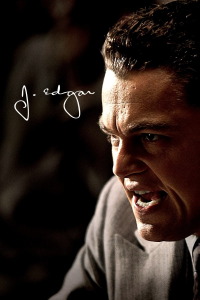
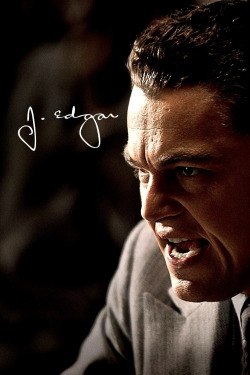
John Edgar Hoover (Leonardo DiCaprio) started out working for the Bureau of Investigation. His domineering mother, Annie (Dame Judi Dench) has been carefully raising him to be moral, upright, and absolutely not a "daffodil." Early in his career, he decides that there should be a Mrs. Hoover, so he begins wooing Helen Gandy (Naomi Watts). She, however, is not even a little interested in being Mrs. Hoover, but she agrees to be his private secretary. Eventually, after he has been made director of the Bureau, which eventually gets the word "Federal" stuck on at the beginning, he meets Clyde Tolson (Arnie Hammer) and is fascinated, hiring him even though Tolson doesn't meet Hoover's exacting standards for an agent of the Bureau. Still, Hoover spends decades transforming the Bureau from a bunch of nobodies into one of the finest police agencies in the world . . . one way or another. It is also a picture of paranoia and obsession, of blackmailing anyone with whom he disagrees.
Eastwood, despite dodging the strongest sexual innuendo, does make explicit that Hoover and Tolson were men in love in a time and place where men weren't allowed to be in love. He also makes it quite clear that he believes Hoover to have been so uptight and repressed that he couldn't have enjoyed a sexual relationship with a woman, either. I find it amusing that various people claim that Hoover couldn't have been gay because he was known to have been associated with various women. First off, this does not leave out the prospect of bisexuality, not that anyone ever seems to consider that option. But more to the point, Hoover [i]did[/i] know how easy it was to blackmail someone with evidence of their sexual improprieties. He absolutely would have wanted to avoid the appearance of weakness. After all, neither time that he suggests getting married is based on any real love of the woman in question. It is that it would look better if he were married. It's not as though it isn't possible to put together a long list of people married for their public image.
Unfortunately, the interesting psychological questions raised by the film, not to mention the history of one of the most powerful men of the twentieth century, are damaged by the failures of the script. It is entirely possible to do a movie about J. Edgar Hoover which examines both his public and private image, but this movie isn't it. The two are curiously separated here, and the structure of the film is so erratic that I wasn't always sure of the chronology of a given scene. Several of the most important moments in Hoover's life are shown--his attempted blackmail of Martin Luther King; his telling Bobby Kennedy of the assassination in Dallas--but the framework for them is unsteady. The script is ponderous to the point of tediousness; the supposedly charming moment with Shirley Temple (Emily Alyn Lind) isn't. And the makeup is purely atrocious, to the point that one rather wonders how Eastwood could have let the state of affairs last without threatening the makeup guy with a shotgun.
Ultimately, it is difficult to judge a life. The movie quotes, twice, a letter written by Lorena Hickok to Eleanor Roosevelt. The letter strongly implies a sexual relationship between the two women--"Most clearly I remember your eyes, with a kind of teasing smile in them, and the feeling of that soft spot just north-east of the corner of your mouth against my lips"--but not all scholars agree there actually was one. After all, women are more physically affectionate and emotionally open with one another, at least in the West, and while it's true that Lorena Hickok was a lesbian, we don't know that Eleanor reciprocated. So too is it unfair to judge the relationship between Hoover and Tolson without anything written between the two of them. In the end, this means that we cannot judge what was going on except by hearsay and supposition; Hoover would have destroyed any evidence just as surely as he made sure that Richard Nixon (Christopher Shyer) didn't get his secret files.
This review of J. Edgar (2011) was written by Viet Phuong N on 22 May 2012.
J. Edgar has generally received mixed reviews.
Was this review helpful?