Review of J. Edgar (2011) by Spangle — 13 Apr 2017
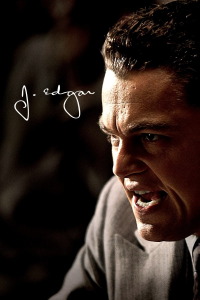
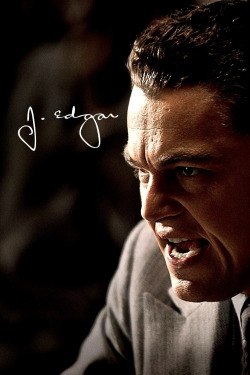
J. Edgar is a flawed biopic from Clint Eastwood that continues to show that his late period fact-based stories always seem to lack something that to make them rise above the trappings of the facts they are based upon. Starring Leonardo DiCaprio as the head of the FBI, J. Edgar Hoover, the film focuses on him starting the agency and the period right before his death. Both show a man fearlessly holding onto his baby and ensuring that it is established as the foremost expert on all matters of crime. Along the way, we see the impact his mother Anna Marie (Judi Dench) had on him, his clearly gay relationship with Associate Director Clyde Tolson (Armie Hammer), his trusty secretary Miss Gandy (Naomi Watts), his obsession with communists, his obsession with organized crime, assisting in the Lindbergh baby case, his dealings with political leaders such as MLK, and his dealings with presidents. All the while, he builds up the agency to nearly being the behemoth we see today. Though well-constructed, J. Edgar has some fundamental flaws that keep it from being successful.
Foremost is the make-up. It may be odd to start here since there are some narrative issues and cinematography issues that also plague J. Edgar, but it only makes sense given how absolutely horrific the make-up is in this film. While DiCaprio and Watts' old age make-up are quite bad, it is really the make-up caked onto Armie Hammer's face that stands as the worst. Throughout much of the film, particularly when Tolson has a stroke, he looks more like a CPR test dummy than a man. His emotions and facial expressions are necessarily overdone and too expressive as Hammer must force his way valiantly through the make-up that undoubtedly made him feel caged within his own body. That said, he is hardly the only one with bad make-up in this film. DiCaprio's is also very bad and never looks authentic. It looks like DiCaprio wearing a lot of make-up and never really makes the audience suspend their disbelief regarding his characters' age.
Narratively, the film never finds a way to use the make-up either, which may make it even worse. Overly convoluted and confusing for a biopic, Eastwood's film freely skips between the 1920s/1930s to the 1960s/1970s without ever really letting you know what year we are in and what situations we are in beyond just tossing Hoover into major cultural touchstones of the 20th Century. Having Hoover dictate his autobiography to a staff member - which was not true anyways - reveals just how slipshod this film really is as we jump from year-to-year without order and go long stretches in the past or present before the film seems to realize we have not seen the other time period in a long time. While it may make sense to use this screenwriting shortcut to tell the story, it really makes the film feel incredibly disjointed and lacking any sort of cohesion. This convoluted approach to telling a story where Eastwood constantly leaves off in the middle of a timeline before jumping to a new one really hampers J. Edgar and makes it feel overlong, poorly paced, and exasperatingly dull.
J. Edgar also struggles when considering the lighting. Now, I love noir films and shadows. Yet, this film is too much. Now, it is not noir, but the chiaroscuro feels pulled directly from those under-budgeted 1940s Warner Bros. noirs and Eastwood seems to try and capture that feeling for this biopic. It is ill-fitting and overdone with faces sometimes entirely obscured by shadows. This really hinders many moments in Hoover's office where we can hardly see the man or the people he is talking to. This may be hinting at some thematic considerations on the part of Eastwood, but if they are, they are never fully realized and really miss the mark.
Now, all of that said, the acting is quite good. As is typical, for DiCaprio, he delivers an excellent lead performance as Hoover and really captures his great power and presence, while still maintaining the other elements of his life quite capably. In particular, these "other elements" include his homosexuality, which is nicely portrayed by Eastwood with a gentle approach. Showing the secrecy that they must live in with Edgar and Colson restricted to slight touches of the hand and two brief kisses, the film shows both the troubles at the time and gives a tender look at the personal and intimate life of such a tough man. Their relationship is not just well-written and nicely handled, but DiCaprio's excellent performance is matched by a similarly terrific performance from Armie Hammer, who plays the only man that really ever understood Hoover at his most vulnerable, being able to quickly tell if he is lying or not.
This review of J. Edgar (2011) was written by Spangle on 13 Apr 2017.
J. Edgar has generally received mixed reviews.
Was this review helpful?