Review of Into Great Silence (2005) by Edith N — 06 Oct 2009
High in the "Not for Everyone" Category.
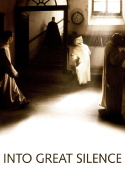
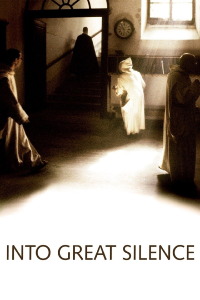
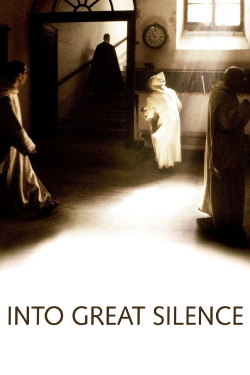
The Bible makes it quite clear that not everyone can live a life of praising God in the same way. Some are called in very different ways. Very, very few are called in this way--the total silence would drive me crazy, for one!--and so it seems entirely appropriate that a film of it would not appeal to everyone, either. It is true that this is a very long film. It's over two and a half hours, in fact. And, for the most part, it is silent or close to it. The only sounds are the natural sounds of the monastery--mostly the sounds of nature and the monks' sounds of praising God. There is no voiceover. There is no soundtrack. There is one scene in which the monks appear to be chatting almost casually, and indeed online references are contradictory about the existence of an actual vow of silence required by the order. Certainly these are men (there are some Carthusian nuns, but none at Grande Chartreuse) who do not speak lightly; even the chat they have is really about monastical issues--and, proving people are the same in many important ways, being snide that the Trappists aren't as strict as they themselves are.
Really, there is no story here. What we have here is Philip Gröning, a German filmmaker, traveling to perhaps the most famous monastery in the world, the monastery of Grande Chartreuse (yes, there's a colour called chartreuse, yes, it's named after an alcoholic beverage, and yes, the monks are the ones who make it; the special features include a one hour documentary on the subject I didn't bother to watch), taking with him only a camera. He spent months living there with the monks, presumably himself abiding by their rules of silence. (Be it vow or tradition.) Indeed, he is essentially the only outsider to enter the monastery grounds in a very long time; they used to accept visitors and now no longer do. As such, there is no story here. There is no structure to the documentary as we think of it. It is almost a string of images, bereft of context, which just take in what it is like in this place, so distant from the modern world--though one monk does talk of traveling to Seoul.
Obviously, we never learn anything of these men. A few of them talk a little; there is that brief discussion of hand-washing and how the Trappists are hopelessly decadent in their six-basin monastery. There is, of course, prayer, hymns, and the Bible. All of these men are there for a reason, not least the filmmaker, but without dialogue, without voiceover, we do not and cannot know any of the stories. We see a pair of novices come to the monastery, but their eventual fate is not told. They are just now part of the population of silence and prayer. Oh, of course we see the men working, as they have worked for the nearly 950 years the monastery has been there, high and alone in the French Alps. There are still gardens to tend, after all. In order to glorify God, they must eat at least enough to survive--and there is the occasional ritual communal meal so that they remember that coming together is also praise for the Lord.
It probably helps, going in, to know something of at least the history of monasticism, if not the Carthusians in particular. The idea of monks living together for the greater glory of God goes back perhaps 1700 years, perhaps longer. This is especially true because a hermit is considered a type of monk. Arguably, this makes John the Baptist the first Christian monk. The Carthusian order in particular is essentially intended to be a group of hermits living in community, if that makes any sense. It's one of the reasons for the silence, actually. Alone in the wilderness, a hermit would only speak to God because there is only God to speak to. Not all monks observe this, of course; I knew a jolly Franciscan friar who occasionally preached at the 8:00 AM Sunday mass at St. Elizabeth's church (just barely) in Altadena, California. The Franciscans glorify God by working among the people; Blessed Frey Junipero Serra was a Franciscan. The Jesuits often run schools. But the Carthusians devote themselves to God and only benefit the common person by praying for humanity; the value of that, of course, depends on your worldview.
I will not decry your intelligence for not liking this film. I will not tell you to instead go watch Michael Bay movies. There are perfectly valid reasons that this film is simply not for everyone, and there's nothing wrong with that. It is very long, and there is no real plot. Some people wish there were, which I think is missing the point of the film. The point, as I see it, is not to tell us a story but to show us a world. Where it gets confusing is that we aren't looking at an ecosystem, which is where we normally expect this kind of thing. We are looking at humans, and humans have stories. Except, of course, that even stories about ecosystems tend to have narration. However, there is a reason for silence here. In order to grasp the realities of these men, there must be silence. Philip Gröning seems to me to be saying that, if you want to know the history of Carthusians or what have you, you should go look it up. If you want to know what it's like to be a Carthusian, 169 minutes of stillness is a good start. [i]Die große Stille[/i] is not for everyone; not everyone wants to dwell in that stillness even for that length of time. However, it is a very soothing film--even if it puts you to sleep, that's soothing of a kind.
This review of Into Great Silence (2005) was written by Edith N on 06 Oct 2009.
Into Great Silence has generally received very positive reviews.
Was this review helpful?