Review of Interstellar (2014) by Clone 1 — 13 Dec 2017
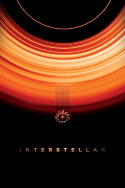
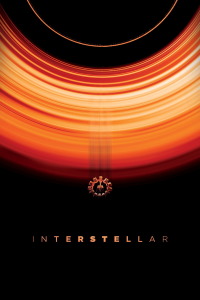
Interstellar: Christopher Nolan's Greatest Film.
Christopher Nolan is arguably the greatest film director of our time. He has had many successful, big-budget films release in the 21st century, such as The Dark Knight trilogy and Inception. However, despite those strong films, I believe that Nolan's finest big film he's made in modern times is Interstellar. That's a strong claim to make, considering the amount of commercially and critically successful films Christopher Nolan has directed, but Interstellar is strong enough to make such a strong claim. This also isn't a new movie still in the theaters,so why write about such a topic? I believe that this movie will be a part of the greatest films ever made in generations to come. The secret to these truths lies in the film's perfect balance of grounded relatability, and abstract concepts.
"Now hang on a minute," I hear you saying, "you've already listed two other films that Nolan's done that do both of those things." That is true. The Dark Knight trilogy certainly does a good job of staying grounded in the world of Batman, while still keeping some of the fictional concepts of the caped crusader in there. However, The Dark Knight trilogy isn't balanced between those two things. Those movies have a greater emphasis on keeping Batman and Gotham City relatively grounded and relatable to our own world. The most abstract concept present in the films is Ra's al Ghul and his League of Assassins, with their mystical knowledge of supernatural things, but even that is fairly grounded in these movies compared to what they can do in the comics. Often times I consider Nolan's Dark Knight movies as the "realistic" Batman movies. There's nothing wrong with that, that's what makes those movies so good, and indeed being grounded is what helps make Interstellar good, but The Dark Knight trilogy is lacking in keeping the audience in awe and wonder of fantastical impossibilities.
"Hang on another minute," I hear you say, "if fantastical impossibilities is what you're looking for, then Inception has you covered." That is also true. Inception definitely isn't lacking in that department, what with the film's concept of going into other people's dreams and subconsciouses, and even making multi-level dreams for a single person. The problem I found with Inception was that, while there were grounded moments in the film, even within the dreams, I found the main abstract concept to be distracting from those moments. I felt the film got too complex within its own fiction for the audience to be able to truly connect with the characters in the story. For me, Inception was an awesome movie to watch, and a good thought-provoking film, but I hardly ever felt moments or characters that I could relate to. Inception is on the opposite side of The Dark Knight trilogy in terms of the grounded-abstract balance. In between these two, though, is Interstellar.
Where Interstellar outshines these other two movies is its ability to have characters and moments throughout the film that feel grounded to our own world, and thus relatable, and the abstract concepts that are interwoven into those grounded moments. The basic summary of Interstellar is a former NASA pilot turned farmer, Cooper (Matthew McConaughey), is approached by NASA in hiding to be a pilot for their mission to find a new home for the human race, as Earth is running out of time as a habitable world with a blight pandemic on the rise. Cooper accepts, but only because he believes that his two kids will be able to escape Earth's terrible fate and live. I don't understand a whole lot about finding other habitable planets to live on and colonize, but I do understand wanting to protect my family and keep them safe. I don't have any kids myself, but seeing Cooper willing to go to great lengths to keep his kids safe, even to go as far as travelling to a whole new galaxy and face the terrors of space just to find a new home for his kids, I could strongly relate to Cooper and his struggles. Part of the reason for this is the performance that McConaughey gives as Cooper. He gave an excellent performance in this movie. That's not to say that Christian Bale and Leonardo DiCaprio didn't give great performances in The Dark Knight trilogy and Inception respectively, but the other part that makes McConaughey's performance more powerful, in my opinion, is the context of the character he's playing. He's not playing as a billionaire who dresses up as bat, or a dream-specialist trying to clear his name of a past murder, he's playing the role of a father who wants to keep his kids safe, even in the darkest places of the universe.
The best example of the blend of grounded relatability and abstract concepts in Interstellar is between 1 hour 55 minutes and 2 hours 11 minutes in the film. *Spoilers ahead.* Dr. Mann, the scientist whose world Cooper's crew went to as their last hope of finding a habitable planet, reveals to Cooper that he faked the data he had been sending out, and that his planet isn't habitable, he just wanted to be rescued. Mann fights with Cooper, and he breaks a hole into Cooper's face shield in his helmet. Cooper manages to contact the rest of the crew that Mann lied about the planet, and that he was suffocating. The remaining crew fly over to Cooper's location and rescue him, while Mann steals one of their other ships to fly up to the Endurance, an interstellar space station Cooper's crew uses to travel to various planets. Cooper follows Mann, and tries to warn him not to dock with the station. Mann turns off the comms on his ship, and doesn't hear these warnings, and then docks with the station imperfectly. When he tries to enter, the airlock depressurizes, and Mann and his ship blows up, causing the Endurance to spin rapidly. Cooper knows that he can't get away from the planet, and in turn he can't save his kids, without the Endurance.
Cooper attempts to match the spin of the station and manually dock with it. This scene is underscored by music, composed by Hans Zimmer, that perfectly relays the tension, intensity, and stakes of the situation to the audience. If Cooper doesn't dock with the station perfectly, not only will he and his crew die, but the rest of mankind will have no hope for survival, including Cooper's kids. The music increases in tempo and volume as Cooper gets closer to docking with the station, and as he begins to dock, the music starts to calm down until it goes to a moment of silence when Cooper and crew successfully dock with the spinning station. I say this moment is not only the best moment of the whole film, but is also a great example of the film's balance between grounded relatability and abstract concepts. Except for a rare few, most of us don't know and won't know what it's like to fly a plane or spaceship, let alone dock one with a space station orbiting a foreign planet that's orbiting a black hole in a foreign galaxy. What most of us do know are the actions we're willing to take to protect those we love, even if those actions seem impossible to others. The interaction between Cooper and a on-board robot, CASE, in regards to matching the spin of the ship with the Endurance, demonstrates this statement:
"CASE: It's not possible.
COOPER: No, it's necessary.".
This brief bit of dialogue in this scene is the best bit of dialogue in the film, due to the grounded-abstract balance the film attains, when impossibilities smack into real and urgent necessities.
While Nolan has made many great films, Interstellar is his finest work, and I believe will always be among his finest work going forward. Whether he can top the perfect blend of grounded relatability and abstract concepts of this film in his future films has yet to be seen, but I believe that this film will go down as Nolan's greatest work, and even as one of the greatest films in human history.
This review of Interstellar (2014) was written by Clone 1 on 13 Dec 2017.
Interstellar has generally received very positive reviews.
Was this review helpful?