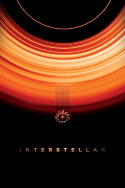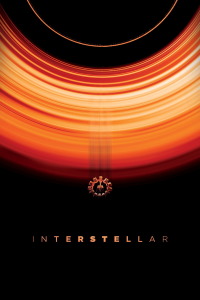
Review of Interstellar (2014) by Originalballoon — 05 Jun 2015
Christopher Nolan seems to draw a buzzing mass of Nolan-fanatics wherever he goes. These little buzzers swarm around The Light That Is Nolan and in His light, nothing can ever go wrong. Who cares if Bane’s death in The Dark Knight Rises was ridiculous?
Okay I get it, Memento was ingenious, The Dark Knight set new standards for the superhero-scope of the cinemaverse, but Nolan sure doesn’t have the Midas hand of movie-making. He’s a man, he makes mistakes, and not all of the stuff he makes turns out so fabulous.
Sure, Interstellar has fancy technology, as its Oscar for Best Visual Effects will demonstrate. The most accurate portrayal of a wormhole, precision of orbital physics and astrophysics, [insert fancy jargon here]…….
All that’s great, except that there’s more to a movie than just technical splendor.
Stanley Kubrick’s science fiction masterpiece 2001: A Space Odyssey isn’t considered one of the greatest sci-fi films ever created only for its revolutionary techniques in portraying space and spaceships; its profound ruminations of the nature of man and the questions it raises on the divide between natural and artificial intelligence are what has put the film on the pinnacle of cinema. Of course, the movie’s amazing sequences of spaceships moving slowly in harmony with Strauss’s majestic pieces cannot be overlooked, but that does not mean they are the sole reason behind A Space Odyssey’s critical acclaim.
Interstellar tries valiantly to mimic both the technical and philosophical marvels of historical sci-fi films like 2001: A Space Odyssey, yet it fails by a long shot in delivering a significant, poignant message. The early scenes between Murph and Cooper fall flat in emotion; neither the acting nor the dialog carry through the fragile emotions that should have been exchanged in such a scene. Nolan’s efforts to raise questions on the “human identity” are easily spotted in scenes that seem almost forced, with little contextual connection to the sequence of events that move the story forward. The best example would be Anne Hathaway’s excruciatingly cringe-worthy scene in which she claims love is worth jeopardizing their whole mission and the future of humanity for. Seriously, this comes out of nowhere—when did Hathaway’s character become so irrational and obsessed with her probably long-dead lover?
“Love is the one thing we’re capable of perceiving that transcends time and space,” she cries. Sound like something from one of those turn-your-life-around-through-these-10-steps books? It’s unbelievably sloppy and unrealistic dialogue, and something I’m not at all surprised to find in a Nolan movie. Self-important, philosophic textbook quotes may work in a superhero movie where the hero is expected to be somewhat presumptuous, but not so much for a supposedly realistic science fiction flick.
What I’ve concluded is that Interstellar is neither unique nor special; its ideas of travel through wormholes and warped time in different areas of the galaxy have already been entertained in science fiction films of an earlier age such as Star Trek. The only factor that Interstellar can show off above all other is the accuracy to which it incorporated modern theories of space and time—the wormhole’s curved surface is supposedly the most accurate representation of such a thing ever put on screen.
Perhaps the supposed scientific genius of the movie becomes more real to its audience because of the background of the movie, or the way the subject of space travel is treated. Science fiction movies like Star Trek seem far off from reality—such movies portray themselves as fiction, a made up world, a world that is usually beyond the parameters of a “what if” world that diverges from our own. Interstellar, however, tries to make itself seem like an extension of the reality we live in—our future very well may have in store for us a dry, bleak land that has forsaken the human race. Dying potato fields and giant dust storm seem less childlike, less like a figment of our imagination than do lightsabers and evil warlords waging war on the galaxy. We are led to empathize with the world of Interstellar as if it were our own and not a created fantasyland, which is why some of the things that happen in the movie seem less absurd than what happens in other films of the same genre (of course, these “things” exclude the infamous bookshelf and Morse code scene, the absolute bane of the movie and the epitome of Christopher Nolan’s over-ambition with his newest project).
So if you thought Interstellar was an absolute blast, good for you. Congratulations for spending those extra dollars on watching IMAX 3D or whatever it is they have these days. Next time though, you might want to consider crashing on your couch with a nice, homemade bowl of buttery popcorn and let Netflix lead you through the world of true, time-proven science fiction. (Of course, Interstellar re-runs are always available. Respect personal preference I must.
This review of Interstellar (2014) was written by Originalballoon on 05 Jun 2015.
Interstellar has generally received very positive reviews.
Was this review helpful?