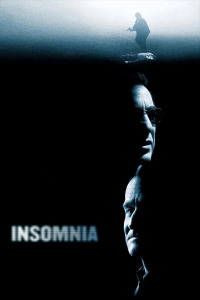
Review of Insomnia (2002) by Jackson M — 19 Aug 2014
"Insomnia" is undeniably a more intimate film within comparison Nolan's other features. It does not feature the usual cerebral narrative structure that the director continually endorses (and therefore, much of the everlasting quality found in his other films is diminished here) but still reflects many of the interesting narrative devices that have become integral to Nolan's stories.
Using the premise of a psychological thriller, the story depicts a tale of two Los Angles detectives that are sent to Alaska to investigate a homicide. While the narrative structure is the most 'straightforward' out of Nolan's work, there are still various little touches that are employed to greatly elevate this archetypal crime story. Like the central characters of "Memento," "Inception" and "The Prestige," Will Dormer (Al Pacino) is another unreliable protagonist. With great use of the natural landscape and some sharp editing, Nolan's representation of Dormer's internal state from a lack of sleep continually puts his judgment, reliability and even 'reality' into question. Moreover, with Al Pacino's performance contributing greatly to this sense of unreliability, the psychological atmosphere of the films habitat is greatly elevated.
In many ways (and probably one the most refreshing aspects about this film), "Insomnia" subverts the typical conventions associated with the crime genre by blurring moral distinctions and destabilizing the generic character dynamic shared between the 'hero' and 'villain.' As in "The Prestige" where both main characters actions are morally questionable (even in "The Dark Knight" - I know the Joker is nihilistic, but he does at times speak a twisted sense of truth and by the end of that film, Batman's actions are also contentious), "Insomnia" endorses a similar interchange. While in the conclusion Dormer seems to gain a sense of resolution by confronting his guilt, for most of the film the character is hanging under of cloud of moral ambiguity (symbolically represented by the gray Alaskan landscape). Adding to these psychological complications is the murderer Walter Finch (played brilliantly by Robin Williams) who constantly attempts to non-differentiate the distinctions between himself and Dormer (or in other words, the lines that define the differences between the cop and murderer are constantly put into to question). Although by the end of the film this sense of moral ambiguity is diminished, the compelling elements of this narrative undeniably come from the playing with these hero/villain conventions.
Essentially, "Insomnia" subversive nature is compelling and features brilliant character direction, but within comparison to Nolan's other films, it just doesn't contain that usual everlasting effect.
This review of Insomnia (2002) was written by Jackson M on 19 Aug 2014.
Insomnia has generally received very positive reviews.
Was this review helpful?