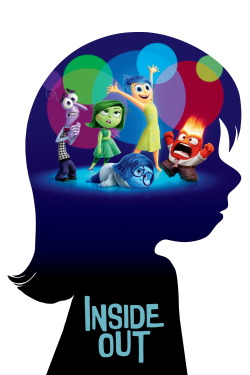
Review of Inside Out (2015) by Nicholas_Linden — 04 Apr 2016
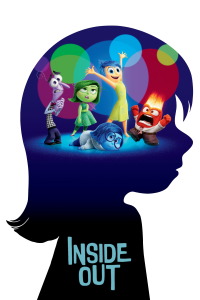
After the release “Cars 2” Pixar has seem to lose its track with critics. Children may still love the films that had come after but adults and critics had some split ideas for the following film “Brave”. That film was enduring as it dived into the relationship between the queen and Merida. However, the story line did rely on some free spirited princess cliches that are a staple of Pixar’s parent company. The “planes” films are “Cars” spin off that have been universally panned by critics and it was very clear that these films were only meant for the youngest of audiences ( i.e. toddlers to six year olds). So when the trailer for Pixar’s latest outing came to theaters, many movie lovers (myself included) people were concerned with how this film was going to turn out. However as soon as the opening credits were over and the film proper had begun, it was very clear to me that Pixar had finally gotten back on its “A” game. “Inside Out” is not only a fun film that can be enjoyed by people of all ages, it is also a great insight on the nature of emotions and how all of them are nessacry in the development of a growing person.
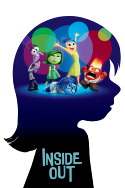
One of the first concerns that I personally had was that the emotions would only have one note personalities. For example, joy would be the generic quirky hero, fear would be the “geek”, Disgust would be the premdomina, sadness would only be able to express sadness and have it be it, and to have anger be the “hot-head” of the group. However, much to my surprise the writers have given the emotions their own distinct personalizes that have other elements of the other emotions. For example, Disgust shows a few instances of happiness when Reilly (their host) would have a chance to be happy with her move to San Francisco. It is only appropriate that the writers would have Reilly go through a move which would cause her to have an emotional breakthrough. Moving is a position that many young viewers could relate and it is an emotional experience for children and adults. Moving is leaving everything that someone loves behind in order to live in a prosperous future. The change is very hard for young Reilly as she struggles to comprehend that the house that her family moves into is not really her dream house. With this drastic change, the emotions start to fight amongst themselves about what is best for Reilly. This makes for a compelling story since the negative emotions like anger and fear and even disgust really want to do what is best for their host.
As the plot progresses, joy and sadness are separated from the rest of the emotions, they meet with Reilly’s old imaginary friend named Bing Bong who was forgotten by her as she grew older. As soon as he had come onscreen, I thought to myself “he is going to find a way to betray Sadness and Joy and then try to take over the mind so that he would be the only friend that Reilly would have. However, the film had made the choice to not throw in a last-minute villain, the film makers had decided to choose a more tragic route for the character. The character disappears towards the end of the film forever which symbolizes the end of childhood and that the emotions need to continue to prosper in the future to maintain Reilly’s emotional balance. It is for the better that the film doesn’t have a main villain, the girl going through her emotions is a strong conflict as it is. The surprise twist toward the end of the film shows the importance of negative emotions as well as positive emotions. The film teaches children (as well as adults) that negative emotions are needed for a balanced life. People cannot experience joy without going through the sadness. A negative experience could be seen as a challenge to help with self- improvement.
There is a running gag in the film about the girl and every character in the film remembering a commercial jingle that keeps popping up in their mind. The gag is not only hilarious but it is also an interesting bit of social commentary. The commercial jingle is a slight reflection of how far people go to promote their product. The jingles were made to be as catchy on purpose so that the target audience could remember their product. Another interesting piece of social commentary was when the cells were dumping the memories that Reilly deems as unimportant. Some of those said memories were the presidents of the United States such as John.
Quincy Adams or Andrew Jackson. This brief segment of the film is a reflection of the ongoing short attention span that the younger generation has towards academia. The newer generations are more prone to being distracted by forms of media and showing less of an interest in studies.
As a final note, “Inside Out” is a proud return to form film by Pixar that not only has a good piece of social commentary but it is also a reflection on hoe all emotions are needed even if they are negative.
This review of Inside Out (2015) was written by Nicholas_Linden on 04 Apr 2016.
Inside Out has generally received very positive reviews.
Was this review helpful?