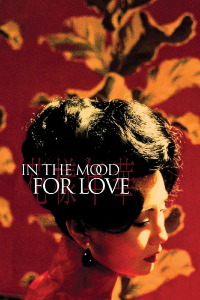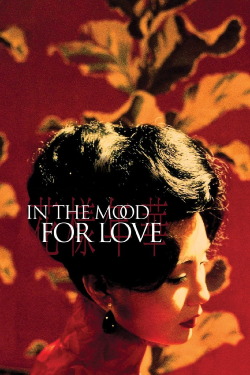
Review of In the Mood for Love (2000) by Steve S — 31 May 2011
Occasionally, you watch a film that sticks with you; one that you were genuinely compelled by, and would remain on your mind for quite some time. It's the kind of film that you leave on even when the credits roll, as you're left stunned as to what you've just experienced. Few films provide this effect, but the ones that do are ones you'll cherish for a long period of time.
In the Mood for Love fits this description like a glove.
We're subjected to a subtle, minimalist romance that demonstrates a profound level of affection between the two lead characters as their lives practically mirror each other. Set in 1962 Hong Kong, we're shown a cultivating relationship between journalist Chow Mo-wan (Tony Leung) and shipping secretary So Lai-zhen (Maggie Cheung) that was sparked by an intertwining situation.
The first time we see these characters, they're renting out apartments which happen to be right next to each other. We're almost immediately aware of their marital status and sense that they're happily married to their spouses. But shortly after, you realize that Chow and So are frequently alone, as their spouses constantly work abroad and have overtime shifts. In the start of the film we see the two leads occasionally intersect, all by chance at first.
We never fully see their spouses. For the most part you'll hear their voices to provide implication. But you never see their faces, and rarely see a body part. But we don't need to see them. Chow and So soon cast suspicions of infidelity to their respective spouses, concluding that they've been seeing each other. You?M)re given the information that is needed.
Writer and director Kar Wai Wong handles with delicacy and gracefulness, which lead actors Leung and Cheung almost perfectly respond to. Despite the pain this brings to the characters, they would rather bottle up what they're facing instead of attempting confrontation. Their curiosity resorts to role-playing, playing out how their own spouses may have sparked their relationship, and making one of their own in the process. However, they don?M)t wish to bring themselves to the same level as their cheating spouses.
It's all presented so stylishly. There's a lot of beauty in this film, from its aesthetics to its depth; from how the two leads carry themselves to how well they dress. But there's also the strikingly vibrant cinematography, the film?M)s original musical compositions, and Nat King Cole.
The original compositions, which are few and mainly consist of string instruments, play an important role. They're played when the leads take a stepping stone of progression towards themselves or with each other. The scenes are entirely in slow-motion, overall deftly contributing to the relationship between the two. But it's also sombre, implying that the fate of this building relationship is wholly uncertain. It all comes together greatly, all relative to the film's time period and atmosphere, bringing a great level of beauty it both requires and deserves.
Despite this, this isn't a film that can be recommended to everyone. A fair amount of may be turned off by the film's slow pace, and many of the film's aspects won't be taken beyond face value. But those who can appreciate and are accustomed to this level of pacing will find that it?M)s arguably an invaluable contribution to cinema in general. It's a gentle, beautiful, and ultimately heartbreaking tale that reminds us why we still go to the movies.
This review of In the Mood for Love (2000) was written by Steve S on 31 May 2011.
In the Mood for Love has generally received very positive reviews.
Was this review helpful?