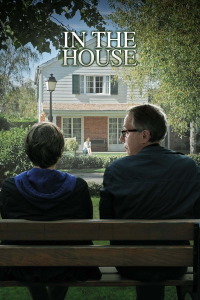
Review of In the House (2012) by José F — 10 Aug 2013
A teenage boy, Claude, worms his way into a middle class family by offering mathematics help to a class mate (Rapha). When his French teacher Germaine asks the class to compose an innocent "What I Did This Weekend' assignment Claude starts writing stories - all ending "To be continued" - based on his visits to Rapha's house Germain becomes increasing intrigued, eagerly awaiting the next installment as he shares Claude's stories with his wife, Jeanne.
In the House, as well as commenting on adolescence, explores the power of storytelling, not just on the characters but on us the audience as we start to question what is real and what is fantasy as the lines begin to blur the deeper Claude positions himself into the household of his new best friend. Claude's stories become more and more disturbing and dangerous to Jeanne but Germaine is hooked and his intrigue turns to obsession as he battles his own conscience; knowing that Claude should stop writing and more importantly stop visiting the Rapha household but his desire to read more won't allow him to.
Like all good literature, Ozon draws us into a world which while following the rules of storytelling - which Germaine continually sets out for Claude - we're still left unsuspecting of what will come next, although when it comes it couldn't be any other way. As with all good narrative perception is everything and Claude expertly manipulates Germaine, and us, the viewer through as the narration of these visits are told only through Claude himself. The ending is deliciously twisted as well and once again reinforces the power of storytelling on the mind's of those who find the allure of provocative fiction more scintillating than the mundanity of reality. But of course, we're left with the question: just how much is reality and how much is fiction?
This review of In the House (2012) was written by José F on 10 Aug 2013.
In the House has generally received positive reviews.
Was this review helpful?