Review of In Harm's Way (1965) by Cameron J — 05 Jul 2014
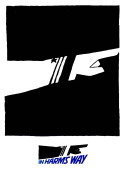
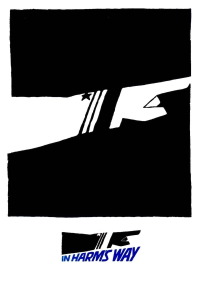
I don't know what's up with Otto Preminger's obsession with arms, because ten years after he did "The Man with the Golden Arm", he lets them put on this film's poster a big ol' arm pointing out, I don't know, harm or something. Well, of course you're in harm's way, dummy, because you're at war! Well, this film is just about the Navy, so, you know, they just need to be careful about what waters you get in, sailors. I'm kidding; the Navy is pretty hardcore, - as this film which actually shows you that will tell you - especially when John Wayne is present, because, you know, nothing says exciting like John Wayne in a World War II film. Yeah, some people gave "The Green Berets" some heat, but I was actually referring to "The Longest Day", because, come on, I cannot be the only guy who didn't think that film got a little boring at times. Maybe it would have been a little more exciting if it was in color, an issue that we know longer have to worry about ever since this, the last black-and-white WWII film... which is, black-and-white, as I said. Don't worry, folks, because this film is plenty good enough to compensate for its literal lack of color, although its featuring the plague on WWII film intrigue which was evidently John Wayne, and its being about the Navy (Seriously, the war film industry is not giving a whole lot of love to the Navy, and all of the excitement of just floating around, waiting for someone to shoot around you) are not the only things going against entertainment value here.
I must give this film quite a bit of credit for its melodramatics' intrigue and at least not being as derivative as they can be, but the fact of the matter is that so much of the dramatic value of this film's story concept thrives on histrionics, which seem to manufacture conflicts and layers in an attempt to mold an epic in a perhaps overblown manner. Again, the melodrama is generally realized, so maybe the film isn't quite as soapish as they say to me, but it's still overblown, even with its questionable dramatics, which you should get used to, but only come to focus upon more as the film progresses, proving to also be overblown in structure. At the very least, all of the excessiveness leads to unevenness, for this narrative features several segments and plot layers that it approaches in a fashion often so disjointed it's almost startling, to the point of convoluting the significance of each plot layer over another. I don't know if the film is so much confusing, as much as it's simply disconcertingly inconsistent in its handling of an arguably overblown network of narratives, and such an issue, plain and simple, derives from the film's running a little too long, for although the runtime of two hours and three quarters is adequately justified by generally tight storytelling, when the feet start to drag, if focus isn't convoluted, it's simply lost. There a few plot holes which thin out the plot's effectiveness, but as irony would have it, it's the overdrawn periods of exposition which really do something of an injustice to a conceptually solid story, because, at the end of the day, a lack of action begets a limited sense of consequence, and allows you to soak in all of the melodramatics and plot bloatings which try too hard to compensate. Honestly, on the whole, I find this film not simply underrated, but very rewarding, although that's primarily because the idea behind this dramatic war epic has so much potential that the final product could have soared, if its kick wasn't so heavily diluted by a touch too much ambition. Of course, the kick is never so diluted that reward value is lost, at least for me, for although I see the complaints critics are making, I find that the strengths stand firm.
I've made my cracks on this film's being black-and-white, but bland technical limitations of the time really do subdue the cinematographic abilities of Loyal Griggs which still stand out at times, with handsome lighting that takes good advantage of the black-and-white palette, and with a certain scope that immerses you into distinguished, typically lovely locations. The visuals of the film carry a sweep that, no matter how subtle, is instrumental in establishing a sense of scale, not unlike the story concept itself, because even no matter how much the narrative's interpretation betrays even conceptual intrigue, there is a certain uniqueness to this extensive take on the works and struggles of men and women of the Navy, maybe even to melodramatics which often fit in the context of human themes comfortably enough to engage, so much so that I mean it when I say that this film could have stood out as a war melodrama. Wendell Mayes betrays much of this potential through an overblown scripts, but he too plays a part in bringing life to this effective epic, with sharp dialogue and enough dynamic set pieces to present a certain colorful flavor, even in writing, while extensive exposition draws memorable and distinct roles, brought to life by memorable and distinct performances. I don't know if any of the performances truly stand out, but most everyone has a time to shine, with some of the more recurring talents including the charismatic Patricia Neal and John Wayne, in addition to Kirk Douglas, who hits some edgy highlights in his layered portrayal of a charming, but flawed Navy man who holds a certain unpredictable brutality that he hopes will get him what he feels is due in his troubled life. Although the unevenly used Douglas hits about as hard as anyone, most everyone endears in this surprisingly intimate epic, and that helps a lot in allowing the film to endear, despite its slow spells, yet can only do so much in comparison with directorial storytelling. Otto Preminger's direction can make or break the engagement value of this drama, and although he hits his missteps, he delivers through and through, making sure that what action there is proves to be thrilling in its sweeping staging and sharp technicality, and that the steady strolls in storytelling which stand in long stretches between the action never lose entertainment value, anchored by tight scene structuring and colorful plays on Jerry Goldsmith's score which hold your interest, while your investment is really secured by moving dramatic thoughtfulness. The brightest highlights of the film are pretty strong, and I really wish that the film was that on the whole, and yet, I still dismiss those who criticize the final product as underwhelming, as there is more than enough inspiration to craft a thoroughly compelling dramatic epic.
Overall, there is a certain bloating to the melodramatics, and plenty of bloating to the storytelling structure, whose unevenness defuses momentum to the point of leaving the final product to meander quite a ways short of what it could have been: an almost outstanding war drama, the glimpses of which punctuate visual style, often well-rounded writing, solid performances, and realized direction so inspired that they secure Otto Preminger's "In Harm's Way" as a consistently rewarding melodramatic tribute to the Navy.
3/5 - Good.
This review of In Harm's Way (1965) was written by Cameron J on 05 Jul 2014.
In Harm's Way has generally received positive reviews.
Was this review helpful?