Review of I Am Not Your Negro (2017) by Dave M — 13 Feb 2017
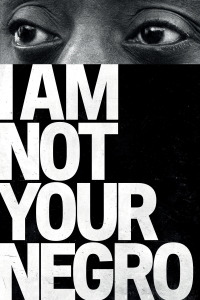
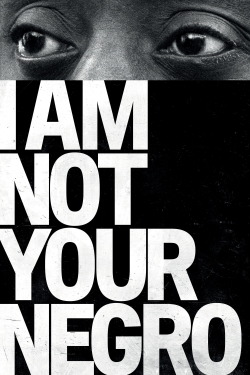
The Oscar-nominated 2016 documentary feature "I Am Not Your Negro" (PG-13, 1:35) is based on the work of African-American author, essayist, playwright, poet and social critic James Baldwin. So, to understand what this film's about and how it came to be (30 years after Baldwin's death), it's imperative to know something about Mr. Baldwin. James Baldwin was born in 1924 and raised in Harlem. Disillusioned and frustrated by the treatment of blacks in post-World War II America, he moved to Paris, but returned to the U.S. in 1957 to do what he could to help in the intensifying struggle for civil rights.
No matter where he was, what was going on or who was criticizing him, Baldwin wrote, lectured and appeared on television talk shows explaining what he believed and advocating for social justice. Besides reflecting the experience of blacks and gays in America, Baldwin's writings were, according to Wikipedia, "eagerly consumed by whites looking for answers to the question: What do blacks really want? Baldwin's essays never stopped articulating the anger and frustration felt by real-life black Americans with more clarity and style than any other writer of his generation." This film offers many such insights.
Baldwin's 1972 book "No Name in the Street" chronicled his experiences as a black man in 1960s America, focusing especially on the assassinations of Medgar Evers, Malcolm X and Martin Luther King, Jr. - all personal friends of Baldwin's. This book can be seen as the genesis and the core of "I Am Not Your Negro", which also fleshes out 30 pages of notes Baldwin made for a book (to be titled "Remember This House") that he had intended to write before he died. This movie tells the story of racial issues in America in the middle third of the 20th century through the eyes of a noted participant and one of its most insightful observers. If only the film had been able to live up to the potential of its source material.
This film uses Baldwin's words (and words consistent with his thoughts, as extrapolated from his final unfinished manuscript) that go deeper than most in explaining the historic racial divide in America and chronicling the experiences of himself and others who lived through and participated in the height of the American Civil Rights Movement. We see Baldwin on screen periodically throughout the movie in archival footage from his speeches, academic lectures and appearances on TV talk shows. The rest of Baldwin's words (including the gaps filled in by screenwriter and director Raoul Peck) come to us through the expert narration of Samuel L. Jackson. Much of the history referenced in the film is illustrated through news footage from the 1960s and many of the points made by Baldwin and/or Peck are made through depictions of blacks and whites in movies and TV shows and commercials. There are also a few relatively recent photos and video clips which make the film seem more relevant than it is.
"I Am Not Your Negro" is an important movie whose potential is overshadowed by poor filmmaking. Besides reminding Movie Fans of some of the history of the struggle for black civil rights in America, the script delivers some valuable insights that will force audience members of all backgrounds to rethink some of their preconceived notions and long-standing assumptions about how people of different backgrounds perceive each other. In addition, some of the video segments and photos which appear on screen have rarely been seen in a cinematic production. Meanwhile, Jackson's narration matches Baldwin's voice so closely that it's easy to forget that you are listening to the distinctive voice of Samuel L. Jackson, creating the effective illusion that it's Baldwin speaking to the audience the entire time.
Unfortunately, these significant positives are outweighed by negatives in the film's design and execution. "I Am Not Your Negro" never bothers to explain or even reference its own title during its runtime and has almost no narrative thread. Events and commentary seem to appear almost randomly and with very little effort to establish context or significance. Instead of using Baldwin's brilliance to shed light on the current racial divide in America, Peck seems content to leave Baldwin's observations in the past where they're frozen in time and place. Worst of all, the film lacks any positivity and offers no hope or ideas on how we can move towards a true post-racial society.
What we're left with is little more than reinforcement for those who are already inclined to find racism in the deepest crevices of American society and in the most innocuous comments and actions of its people, while adding to the sorrow of well-meaning individuals who insist on wallowing in the guilt of injustices that occurred before their time and for which they're not personally responsible. I can't help but believe that Baldwin would be disappointed in how poorly his views are articulated and how badly they are squandered in a film which has gained enough attention that it could have made a real difference in moving forward the conversation about race in America. What a waste. "C-".
This review of I Am Not Your Negro (2017) was written by Dave M on 13 Feb 2017.
I Am Not Your Negro has generally received very positive reviews.
Was this review helpful?