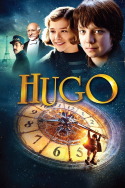
Review of Hugo (2011) by Katy E — 22 Jul 2014
By now I am sure the information has reached your doorstep: Hugo is not like any other Martin Scorsese movie. There are no gangsters or people getting their heads slammed in car doors or anything like that. Even the main antagonist is more comic than threatening. That being said, this family-friendly fable is not without some familiar Scorsesean flourishes, for instance an alienated and somewhat obstinate central figure(although, admittedly, Hugo Cabret is a million miles away from Travis Bickle). And yet, it may just be Scorsese's most personal movie. It touches upon the idea of the loneliness and difficulty, but also the enchantment and magic, of being an artist. In what's arguably the most poignant scene, our Dickension hero begs the station inspector, a maladroit and malevolent man who resents children, to release him from his grasp, by pleading through his tears: 'This is my only chance, to work.' It's hard to believe that these are not the words of the director seeping through the cracks of his designs. The words of a man who had no other choice but to be a filmmaker. On the surface the movie may be the stuff of fantasy and dreams, but the feeling behind it is mature and heartfelt. This is Martin Scorsese, with his heart on his sleeve, declaring his love for his craft.
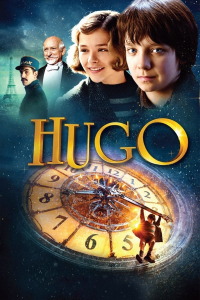
Asa Butterfield stars as Hugo Cabret, a young boy who lives in Paris in the 1930s with his loving father(Jude Law), who is a devoted clockmaker and talented inventor. Hugo's happy life is stripped from beneath him when his father abruptly dies in a museum fire and he is taken under the care of his boorish and drunken uncle(Ray Winstone), the official timekeeper at the railway station Gare Montparnasse. When Hugo's uncle seemingly disappears, the youngster is left to fend for himself. Remaining within the busy and colourful train station he takes care of the clocks, filches food to survive, and has run-ins with the mean-spirited Inspector Gustave(Sacha Baron Cohen). He also works on his father's unfinished project- an odd-looking mechanical man(or an automaton), which he believes that when fixed will contain a special message. His search for this message unites him with a bookish young girl named Isabelle(Chloe Grace Moretz) and her uncle Georges, an embittered toy-shop owner who is not all that he seems. Hugo and Isabelle's innocent wish to uncover a mystery takes them on an enchanting adventure that touches upon the magic of cinema, friendship, and family.
The performances by the young actors are very fine and both Butterfield and Moretz are given interesting and likeable characters to work with. Hugo makes for an endearing hero. An orphan with big innocent eyes and shabby clothes, he looks like as if came straight from a Charles Dickens novel. In one excellent and funny scene Hugo and Isabelle manage to escape the attentions of the station inspector by laying stress on his 'doltish' looks. He is, no doubt, a character designed to evoke the pity of the audience, but he's not without pluck and substance. His vulnerability is mingled with a likeable toughness and practicality. He also has a stubborn streak and is reluctant to let anyone else in on his secret project. Moretz plays the wide-eyed and friendly Isabelle, whose fondness for secrets and adventure is very much intertwined with her love of literature. Some humour is derived from her impulsive desire to flout her precocious vocabulary, much to the bafflement of the less verbose Hugo. Sacha Baron Cohen brings a brilliant lightness and comic timing to his conceited and cruel inspector Gustave, but his character is also very sympathetic, especially when we witness his woeful attempts at wooing a flower-lady(Emily Mortimer). Hugo may be the hero but in many ways the movie is as much about Ben Kingsley's character, Georges Melies(based on the real-life filmmaker and magician), and his struggle to come to terms with his past. In one touching scene Hugo, like the ghost of the old man's lost hopes and dreams, follows the hardened Georges through the cold and snowy streets of Paris.
Quick confession: I have not seen this movie through its intended medium of 3D, meaning I missed the chance to experience a train flying at me through a screen and that sort of thing. I can imagine how the images of the churning clockwork and the steam-filled station might have worked very nicely through 3D, but honestly I think that this movie works just fine on the small screen. Unlike efforts like Avatar, this movie is more heart than spectacle, and it has the durability to transfer to the smaller screen. It's the type of movie I can imagine being played on TV at Christmas for many years to come. Moreover, 3D or not, the visuals are still spectacular. From the opening scene where an aerial camera-shot swoops us down from the bright Paris sky and lands us in the Gare Montparnasse, where we find Hugo staring out from a giant station clock at the bustling activity below, the look of the movie is absolutely fantastic. The romantic depiction of the station and the period detail of Paris in the 1930s is inspired. I also loved the clever cultural references, such as the popping up of James Joyce and Salvador Dali, at a time when Paris was a gathering place of artists. Speaking of Joyce, the movie seems to channel his work in more ways than one. It boasts a Joycean sense of humanity and, not unlike Ulysses, the movie is at heart a simple story of a family coming together, and the meeting of a spiritual father and son. Hugo is a delight.
This review of Hugo (2011) was written by Katy E on 22 Jul 2014.
Hugo has generally received very positive reviews.
Was this review helpful?