Review of Hugo (2011) by Nolan L — 08 May 2018
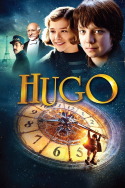
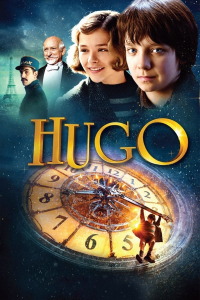
Martin Scorsese, director of over 60 separate movies, has only directed one children's movie, a film called Hugo. When asked in a CBS 60 Minutes interview with Leslie Stahl if this film was slightly autobiographical, since Scorsese had quite a sickly and therefore lonely childhood, he said, "That, I think, was the first connection. I loved the idea of a young person who's unable to join in, 'cause of me with my asthma and that sort of thing" (CBS News). He also cited his interest in Georges Méliès, the filmmaker and director that Hugo centers on, as a reason why he signed onto this film. Méliès liked to experiment with different elements in his films, such as different techniques of editing. Scorsese said that he "wanted to use 3D as another storytelling element", because he wanted to explore new technologies, just like Méliès had done in his films. In Martin Scorsese's Hugo, a boy named Hugo learns about a mysterious old man's past, the filmmakers using beautiful cinematography and special effects to create a visually stunning and entertaining film while also conveying the message that all hope is never lost.
Hugo Cabret, an 11-year-old boy, lives in the walls of a train station in Paris in the 1930's, taking care of the many clocks within. After the filmmakers introduce Hugo, viewers then come to know about an automaton, a machine resembling a human that his father found at the museum where he works. However, Hugo's father passes away in a fire at the museum before they fully fix the automaton, leaving Hugo in the care of his uncle Claude, the manager of the clocks at this train station. When Claude disappears one day, Hugo is left to tend to the station's clocks and fix the automaton alone. Hugo finishes fixing the automaton, but the machine will not properly work without a key in the shape of a heart. He then meets a girl named Isabelle, the goddaughter of the train station toymaker, and finds that she has the exact key that will fit into the keyhole of the automaton. After turning the key in the lock, the automaton relays a very cryptic message from Hugo's father pointing to the mysterious past of Isabelle's godfather, Georges Méliès (Hugo, 00:00:00-00:55:38). This begins a great adventure filled with mystery for both Hugo and Isabelle.
During the film, the filmmakers and editors use a mix of beautiful cinematography and stunning special effects to create a visually outstanding experience for viewers watching in 2D and 3D. When the film first opens, the inner workings of a clock transform into an aerial shot of cars circling the Arc de Triomphe (00:00:47-00:00:56). Scorsese uses this as a very interesting way to show the setting of the film, while also introducing clocks as a key element of the film. Peppered throughout the film are instances like the clock and Arc de Triomphe, with the post-production editing taking center stage to enhance the scenes in a somewhat obvious way. One example of this happens when drawings fall out of a box (01:00:52-01:01:24). The camera picks out specific pictures and slows their descent in a way that shows every detail. Another example of this happens when snow falls throughout the film. These scenes are edited to make the viewers feel part of the scene. In these ways, the editors and filmmakers make the viewers feel like characters in the film, watching the storyline unfurl right in front of them. Of course, these effects feel amplified for viewers watching in 3D. Instead of the snowflakes standing out slightly on the screen, they feel close enough to touch, and the pictures which originally floated past the camera gently now seem to jump off the screen. Using beautiful cinematography and post-production editing, the filmmakers and editors create an incredible experience for the audience.
Through this film's storytelling and special effects, filmmakers convey the message that all hope is never lost. At the beginning of the film, most of the characters have lost hope in some way. Whatever the cause, Hugo himself sums up this hopelessness when he says to Isabelle, "Maybe that's why a broken machine always makes me a little sad, because it isn't able to do what it was meant to do. Maybe it's the same with people. If you lose your purpose, it's like you're broken" (01:19:00-01:19:16). Hugo's statement actually conveys some measure of hope, since both machines and people can be fixed. As the film continues, each character grows in hopefulness. As they become more hopeful, their character flourishes. Filmmakers use characters from many different backgrounds to illustrate the message that hope is never lost.
In this film, a boy who seems to have lost all hope finds it, all while helping an old man rediscover his purpose. Filmmakers use beautiful cinematography and special effects to create a visually stunning display for people of all ages. This film is great to watch with the whole family. It has something for everyone. Not only does this film entertain the family, it also sends positive messages to children in a very subtle way. By watching this film, adults and children alike will get to experience the story in a way that feels real and genuine.
This review of Hugo (2011) was written by Nolan L on 08 May 2018.
Hugo has generally received very positive reviews.
Was this review helpful?