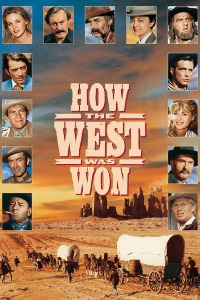
Review of How the West Was Won (1962) by The Movie W — 08 Sep 2012
I recall viewing this film as a child and wondering why I could only see the actors' noses and ears speaking to one another. Later it was shown in full widescreen and I realised that the previous TV screenings had been victim to the barbaric and now thankfully extinct practice of "pan & scan". The picture, like all widescreen movies shown on TV until quite recently, had been cropped to accommodate the TV screen. The movies which suffered most from this philistine ritual were the lavish Hollywood productions of the fifties and sixties. Casts of thousands were often reduced to no more than ten centurions and half of Liz Taylor's face. Ironically widescreen was originally developed to combat the growing popularity of the domestic television set.
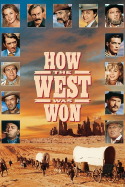
"How the West was Won" was filmed in that widest of formats, Cinerama, and was the only real success of the format, discounting the various travelogue documentaries. This was to be an epic undertaking on a scale never before witnessed in the western genre. By celebrating the conquering of the West, Hollywood was acknowledging the factors which ultimately led to it's own foundation. While it brashly celebrates the American pioneer spirit, the film avoids a rose-tinted view of events. It's a movie which isn't afraid to acknowledge that while the taming of the West is a story of hard toil and ingenuity it's also a tragic tale of deceit and broken promises.
Spencer Tracy narrates a storyline which is broken into five segments. Strangely, given the reputation of it's director, John Ford's "The Civil War" is the weakest. Ford evidently viewed the Cinerama process as no more than a gimmick and makes little effort to compose his shots in a manner which exploits the distinctive shape of the frame.
The most exciting segment is George Marshall's "The Railroad", featuring a chilling performance from Richard Widmark as a railroad foreman who cheats an Indian tribe out of their land. There's a thrilling scene involving a buffalo stampede which must have been some experience in a theater fitted with a Cinerama screen. Compare it to a similar sequence in this year's dire "Abraham Lincoln: Vampire Hunter" and see how far Hollywood spectacle has sunk. No amount of CG can compare with the sight of a herd of live buffalo running rampage across the screen. Marshall is one of Hollywood's forgotten men, known for helming action scenes for other directors. He's responsible for no less a set-piece than the famed chariot race in "Ben Hur".
Henry Hathaway takes on the remaining three segments, "The Rivers", The Plains" and "The Outlaws". His westerns were usually more intimate tales and here he focuses on the journey of two generations of a pioneering family. Of the three directors, it's Hathaway who uses Cinerama to it's best advantage. His shots are beautifully composed, exploiting the unique sense of depth the format was renowned for. I know it's a cliche but you really could hang any of these shots on your wall.
This is a light film for the most part but a must see for fans of good old Hollywood extravagance. I recommend the Blu-ray which features a second disc employing the "Smilebox" technique. This replicates the curved screen of Cinerama and makes for one of the most impressive sights you're likely to see on a HDTV.
This review of How the West Was Won (1962) was written by The Movie W on 08 Sep 2012.
How the West Was Won has generally received positive reviews.
Was this review helpful?