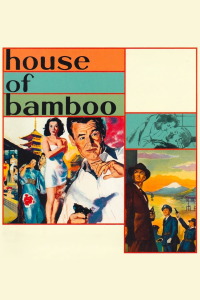
Review of House of Bamboo (1955) by Kris K — 22 Nov 2008
As always, Fuller is brave in tackling sexual and gender issues in 1950s American cinema like no one else did or could -- perhaps apart from Douglas Sirk. In House of Bamboo, the use of color and the cinematography are wonderful, exploring the locale as the West clashes with the quite displaced -- even in the citizens' own cities and villages -- East.
It's hard to believe that Fuller, whose previous films (especially Pickup on South Street) dealt strategically with dark, dank city images and innovative close-ups, is here mixing a colorful and richly nuanced cityscape with more expansive landscape and exterior shots, not to mention that the film itself relies on long- and medium-shots, eschewing close-ups altogether.
What results is a film that exists in a liminal geographic locale just as it exists in a liminal space in terms of genre: it is hardly film noir, though it draws from that tradition, but it is deeply rooted in Fuller's unique exploration of the ways in which subversive and often transgressive characters can become central, the very focus of the narrative rather than merely marginal figures.
This review of House of Bamboo (1955) was written by Kris K on 22 Nov 2008.
House of Bamboo has generally received positive reviews.
Was this review helpful?