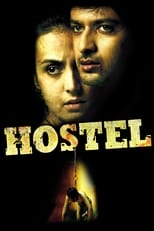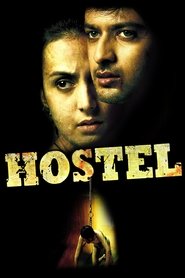
Review of Hostel (2011) by Jamie C — 28 Feb 2016
Being one of Eli Roth's most popular films, Hostel sounded like a passionate exercise in torture porn.
Anyone familiar with the auteur style of Eli Roth should be well aware of what to expect from Hostel: blood and gore at the expense of narrative. Not a person who has experienced all that much in the way of torture horror films, Hostel presented an opportunity for me to bridge in to the genre and determine precisely where I stood in regards to the genre. Quite frankly, I must express admiration for Eli Roth's work.
Knowing that the torture horror is going to kick off at some point is a key part of the thrills in Hostel. Rather than relying solely on blood and gore, Eli Roth preys on the viewer's expectations by building up an intense atmosphere through the use of dreary scenery and the cinematography that captures it, as well as the implications of the musical score. The scenery in Hostel is what I enjoyed most about the film. With a careful eye for strong imagery, Eli Roth establishes the perfect locations for Hostel. As the setting of the film begins to unfold, viewers are treated to the brilliant scenery of the Czech Republic. The more the narrative progresses, the more of the countryside viewers are given a chance to experience. When it reaches its extended climax scene, viewers embrace the full effect of this as Eli Roth finds a perfect abandoned property to provide a feeling of isolation for the film. The city of Cesky Krumlov provides some decent cultural flair by displaying the natural state of its architecture, and this is both visually appealing and yet reinforced by the footage of empty countryside. As a result, everything contributes to making the story context of Hostel feel nothing short of genuine. And while the wide-angled shots capture the full extent of the countryside, the many small-scale ones help to provide viewers the feeling of confinement that traps the characters in a story of violence.
Since Hostel has to give in to the obligatory context establishment of any normal story, it reserves its sadistic violence for closer to the halfway mark. Up until then, the mysteries of its setting are established. The story in Hostel preys on the fears and anxieties of careless tourists with particular emphasis on the egotism of young Americans. It is a thoroughly predictable one, but it doesn't even try to hide this. What's unpredictable is precisely when the horror of the film will strike, and Eli Roth manages to keep viewers on the edge of their seat in wonder about when it is finally going to happen. The aforementioned scenery helps this, but the musical score is also a key factor. The majority of the music uses a subtle-building score to provide the intense backdrop of mystery to the story, getting more climactic during the climactic scenes of the story. It never hits audiences too heavily, but it never gets too quiet which certifies a strong level of restraint in the score to grasp the atmosphere.
When the true nature of the violence in Hostel finally reared its ugly head, I found that it was actually less explicit than I was expecting. Though it is indebted to its sadistic depiction of blood and gore, Hostel doesn't depend solely on it. Even though the story is very simplistic, it takes the time to build up its atmosphere before unleashing the gore. Much of the horror comes from the idea that such a place could actually exist in the world, and given the sadistic nature of real life crime rings such as the skin trade, for all we know the horrors depicted in Hostel could actually exist somewhere in the world. When it comes to actually depicting the torture, the detail in the blood and gore doesn't come up short since Eli Roth is favourable of exploiting it. The actors are responsible for supporting this with cries of pain to help to torture seem genuine, and they certainly work to capture that. Hostel effectively finds horror in the development of its atmosphere, the performances of its actors and the violence of its exploitation nature.
What must be considered is that being aimed at the exploitation market, the generic contract for Hostel is for it to offer blood, gore and nudity. Since Eli Roth has a deeply ingrained passion for blood and gore, it is definitely something viewers can expect. But he doesn't neglect the need for a high quantity of nudity. He never goes overboard with his depiction of sexuality, but either way Hostel carries enough topless women to entertain the teenage male audience most likely to be sitting in front of the screen.
And like I said, Hostel maintains a cast who know how to convey pain and suffering with raw energy. Derek Richardson is given only a single scene to face the horror of his torture, but he manages to do it with a genuine state of suffering. It is Jay Hernandez who has the responsibility of carrying the majority of the film. Blending in with his friends at the start of the film, Jay Hernandez starts out with an easygoing persona which gives him a naive edge. As things progress more, Jay Hernandez builds a greater sense of suspicion to the world around him which he conveys through a steady increase of swift head movements and an intense stare in his eyes. He is able to maintain this state of mind all the way until he reaches his turn to face the torture, and he exposes the most of his vulnerabilities and tension in these scenes. After all the screams and shouts of this, Jay Hernandez awakens the last edge of his character by bringing out a vengeful edge in the part. He lets his emotions completely take over in the final scenes of the film and slowly unleashes more and more of his angry instinct which adds a different spectacle of intensity to the feature. Jay Hernandez carries Hostel very well with his leading performance.
Hostel doesn't even pretend to have a story with depth because it is aimed strictly at the exploitation market, but amid Eli Roth's keen eye for blood and gore is a steady build of genuine intensity stemming from the director's manipulation of music, scenery and cinematography.
This review of Hostel (2011) was written by Jamie C on 28 Feb 2016.
Hostel has generally received mixed reviews.
Was this review helpful?