Review of Hombre (1967) by Mike B — 07 Jul 2009
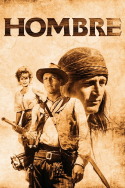
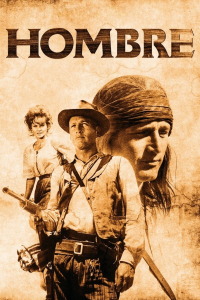
Reading Elmore Leonard's HOMBRE, it's hard to imagine anyone as right for the title role in a movie as Mitchum, circa '45:
'Picture his face shadowed by the hat. First you just saw how dark it was . . . Dark--I swear--as the faces of the two White Mountain boys. Then you saw how long his hair was, almost covering his ears, and how clean-shaved looking his face was. Right then you suspected he was more to those Apaches than a friend or a boss. I mean he could be a blood relation, no matter what his name was, and nobody in the world would bet he wasn't.
'When Mr. Mendez spoke to him you believed it all the more. He stepped closer to John Russell's roan horse, and I remember the first thing he said.
'He said, "Hombre.".
'Russell didn't say anything. He just looked at Mr. Mendez . . . .
'For a second we were close and I saw his eyes . . . [their] tell-nothing-but-know everything expression--but then there's the image upon which Martin Ritt's HOMBRE opens--'[only] John Russell's eyes were blue, light-blue looking in his Indian dark face. Maybe that doesn't sound like anything, but I'll tell you it gave me the strangest feeling.'.
And from then on, Paul Newman is Hombre: mustanger; raised Apache; keeping 'clean and quick,' even as so many of his people were stuck and starving on the San Carlos reservation he, for a time, policed. With the railroad coming and one last stagecoach going (and nobody menaces a stagecoach as well as Richard Boone from THE TALL T), times again are changing, but like Kristofferson's Billy the Kid says to James Coburn's Pat Garrett: 'Times, maybe. Not me.'.
This review of Hombre (1967) was written by Mike B on 07 Jul 2009.
Hombre has generally received very positive reviews.
Was this review helpful?