Review of Hiroshima Mon Amour (1959) by Elvira B — 25 Dec 2009
A French actress shooting a film about peace in Hiroshima meets a Japanese man in a bar. They decide to go together. They fall in love. The woman describes to the man her past in France: her adolescence, her first love, her first loss, her madness.
The backdrop of Hiroshima, Mon Amour, is obviously the horrors left behind by the atomic bomb. The woman herself acknowledges the irony of falling in love in a place like that. The images of disease and misery, in contrast with the lovers', constitutes a great deal of the poetry the film involves.
Throughout most of the story, both characters are shown in moments of intimacy: either having face-to-face conversations, or in bed, sharing their deepest secrets and most bizarre thoughts. In a way, their love is born out of interest, or need: both characters have survived tragedies (linked also to the war in one way or another), and that particular point in common is what brings them together. They find in each other a space of trust to let out their pain. They re-imagine the situations of their past including the other: their connection is so profound that it seems, as they often repeat, impossible to envision life without the other.
Hiroshima Mon Amour is a very experimental, poetic film. Alain Resnais's masterpiece is the precursor of such beautiful films as Before Sunrise, or Lost in Translation, or A Man and a Woman, only that the waters here run deeper and darker. Resnais shapes his characters out of the cries and the loss of World War II, showing his audience just how much damage the conflict caused. Thousands of stories of abandonment behind the faces of 2 characters. At the same time, it's also a film that exemplifies with unbelievable beauty the possible randomness of empathy: The relationship between the leads is unforgettable, epic, transcending chemistry or compatibility. But why in Hiroshima? Why this man, or this woman? Why now? Resnais manipulates their memories, their perceptions, time, and space, to create one of the most intense love stories I've ever seen onscreen, even when the most evident expression of physical love he allows himself to show is but a kiss.
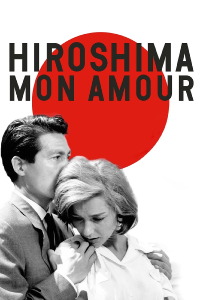
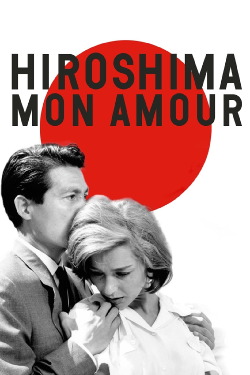
The image of the woman's hand on the man's back is an icon of French new wave, and one of the most significant representations of intimacy world cinema has ever produced.
This review of Hiroshima Mon Amour (1959) was written by Elvira B on 25 Dec 2009.
Hiroshima Mon Amour has generally received very positive reviews.
Was this review helpful?