Review of High and Low (1963) by Edwin A — 30 Aug 2008
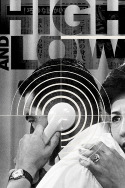
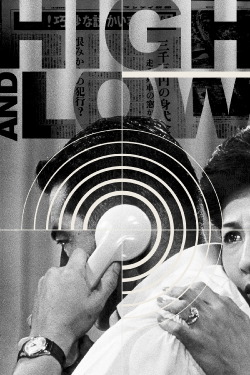
Akira Kurosawa dipped into the facets of hardboiled American crime drama with his 1963 masterpiece High and Low. Working from Eijiro Hisaita's screenplay, based on a novel by Evan Hunter, Kurosawa crafted one of the most meticulous and influential police procedurals in film.
The incomparable Toshiro Mifune plays Kingo Gondo, a rich executive of the National Shoe Company. Faced with a restructuring by other executives that would see the quality of their products drastically reduced in order to increase profits, Gondo secretly arranges to buy out the majority of the company's stock and successfully take it over. In order to do so, however, he must mortgage everything he owns. On the evening he is to complete the take over, a call comes to tell Gondo that his son has been kidnapped. He demands a ransom, one which will bankrupt Gondo and end his planned takeover of the company. Willing to pay that price for his son, miraculously the boy walks into the house unaware of anything that has just happened. The kidnappers have made a mistake; they have taken his chauffer's son. Gondo is now faced with a moral dilemma: Does he pay the ransom and lose out on his company to save the life of another man's child or play hardball?
What I have described thus far is the first of two parts in High and Low. It is no spoiler to divulge that Gondo chooses to spend all he owns to save the boy, culminating in a marvelous exchange sequence on a train. This scene was carbon copied in other films, notably Along Came a Spider.
The second part of the film is a marvelous police procedural following the hunt for the kidnappers in an attempt to get back the noble Gondo's money. His plan to takeover the company has been revealed, and now with no money he's been fired. Kurosawa was obviously inspired by American crime films, particularly the films of Jules Dassin (The Naked City). He weaves clever ideas placed to out the kidnappers early on, then dives into the pavement pounding difficulty of catching a criminal in a bustling city.
Kurosawa crafted his crime thriller so meticulously, planned so carefully, and leads us towards moral conclusions only to subtly pulling the rug out from under us in the final scene. He has one of the most prolific and impressive resumes in film, delivering everything from swashbuckling samurai epics to touching human dramas, and here to hard boiled crime fiction. This was of course not Kurosawa's first foray into the genre - His Stray Dog and Drunken Angel are also excellent films, though High and Low is likely the best.
Praises to Kurosawa aside, Toshiro Mifune as well must be applauded. He carried many of Kurosawa's best films. His brooding presence in High and Low is one of the high points. Mifune is able express so much simply by sitting and staring.
As far as police prodecurals go, High and Low is one of the best. It's high quality filmmaking has raised it above the majority of the films it was inspired by. For example, while obviously inspired by The Naked City, a great example of police procedure while not necessarily a great film, High and Low doesn't miss a beat and achieves a whole other level.
This review of High and Low (1963) was written by Edwin A on 30 Aug 2008.
High and Low has generally received very positive reviews.
Was this review helpful?