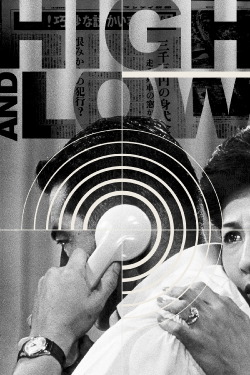
Review of High and Low (1963) by Ryan H — 16 Mar 2011
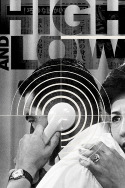
Toshiro Mifune really shows his talents in High and Low. He plays Kingo Gondo, a millionaire who is the executive of a shoe company. The moment we see Gondo we feel his strength and importance. Nothing is going to shake this man, he goes by his own rules and no one else's. Unfortunately, that's just not the case when someone kidnaps his chauffeur's son, even though he meant to kidnap Gondo's son. Kurosawa takes his time in each scene, building up the characters and the situations. It really makes the two biggest payoffs feel well deserved. The tension keeps building and building, but he never really lets his grasp from the audience loose. Gondo has chosen to invest 50 million in stocks so that he can run the company and move things in a different direction. He has risked everything for this opportunity. When he first thinks his son has been kidnapped he freaks out and says he will raise the 30 million that has been requested and will take care of things, but the moment he finds out it's not his son he has to question whether or not it's worth paying the ransom. I mean, it's everything he has worked for, and it's just the chauffeur's son, so is it really worth going broke for him? He could keep the money and hope the kidnapper is just bluffing, or he can save the boy's life. This is really the first time sociological questions come in to play, and they don't leave throughout the rest of the film. We see that Gondo's home is placed at the top of a hill, and everyone below him is living close to poverty. They have to look at that all the time, imagining what it would be like in that family's position. It's really the physical division of rich and poor. When Gondo says he can't give the money to save the boy his wife gets mad, but he points out to her that she has been rich and spoiled her whole life; she could never understand what she would be giving up by giving away that 30 million.
**SPOILERS**.
Really, halfway through the film we get our first spoiler. Gondo decides to pay the money, so he goes through everything and pays the kidnapper to get the boy back. The majority of the rest of the film follows the police trying to find out who the kidnapper was, then getting him on charges that will keep him in prison for the rest of his life (or hang him). I found this to be a little silly, but still entertaining, seeing as the group that is tailing the kidnapper go together in groups. Maybe it's too many recent films, but wouldn't he have gotten suspicious pretty quick? It really doesn't ruin the movie because you could come up with plenty of reasons. Tailing the kidnapper leads the police through the poorer region of the same city that Gondo lives. The club where he gets the drugs is crowded and hot. Then there is a specific place that holds all the junkies. In here we see a woman who is having withdrawals, and the kidnapper takes her to test the heroin to make sure it is pure enough to kill her. I think the sickest part of this is seeing the police talk to each other like they know they are heading towards junkie central and they know they are about to head to a whore house. They're poor, who cares? The capture of the kidnapper is a little underwhelming, but that's because Kurosawa is saving the best punch for last. Gondo is told the next day that the police retrieved the money except for 20,000 which was spent on the heroin, and while they are telling him the good news Gondo is getting all of his things repossessed. He is embarrassed, but his family will make it. The kidnapper requests to see Gondo and he agrees, and basically we discover that he did it simply because he was tired of looking at his nice house on the hill while everyone suffered. During this scene there is a reflection on the mirror, pretty much showing that they are both feeling some of the same things; they are man, they are similar. The kidnapper says the poor like to see the rich go through pain too. I expected the kidnapper to be tied in with the men at the company who wanted Gondo out, so it was surprising to hear the connection wasn't there. I think that's the strongest punch of them all. Kurosawa leaves his audience thinking about sociological differences while entertaining them to no ends with a brilliantly crafted crime story.
This review of High and Low (1963) was written by Ryan H on 16 Mar 2011.
High and Low has generally received very positive reviews.
Was this review helpful?