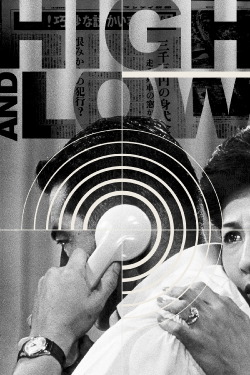
Review of High and Low (1963) by Miles M — 23 May 2016
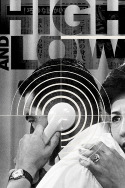
This oft-overlooked treasure is among director Akira Kurosawa's finest works. In two wildly different acts the film manages to be both a complex morality tale and police-procedural thriller.
The first act watches like a domestic drama. We never leave Gondo's home, but it is in this seemingly claustrophobic setting that we witness Kurosawa's brilliant use of space and increasing adeptness with widescreen composition. Watch how he places his characters: the police passively observing as the chauffeur finally breaks down and begs Gondo to save his son; and Gondo backed into the far right of the screen, writhing against the window in the knowledge that the moral imperative of saving the child will ruin him; the frame is so packed with kinetic characterization that we seem to feel movement despite a static camera.
In act 2 we really start to move and are reminded of Kurosawa's masterful use of tracking shots to plunge into the unknown. Much like the penetration into the forests of "Rashomon" and "Throne of Blood," the camera freely roams about a different type of jungle: the slums below Gondo's stately home as we follow the brilliantly systematic police force in their quest to find the villain.
The lack of unity and disparate stylistic approaches between the two halves of the film are set up by the title: "High and Low." The disjunct nature of the film gives it it's charm but may also be the barrier that has kept the film from enjoying the same level of acclaim as Kurosawa's more stylistically unified works. This film is loaded: It's an examination of morality as well as a critique of individualism and ambition. It's a head-scratching whodunit and police-procedural potboiler, but above all it is endlessly entertaining.
This review of High and Low (1963) was written by Miles M on 23 May 2016.
High and Low has generally received very positive reviews.
Was this review helpful?