Review of Hidden Figures (2016) by Semira C — 06 Dec 2018
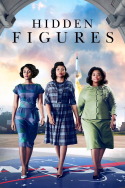
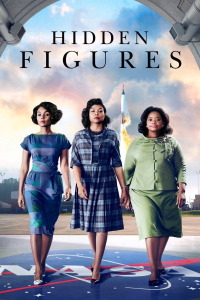
When asked the question, "Describe the mathematicians at NASA that sent John Glenn into space," People illustrates white male Colleagues. Hidden Figures, directed by American screenwriter and producer Theodore Melfi, illustrates the experiences of African American women Dorothy Vaughan, Mary Jackson, and Katherine Johnson during the 1960s. Based on a true story, the three women worked at NASA, serving as the brains behind one of the most monumental operations in history: the launch of astronaut John Glenn into orbit. This remarkable achievement restored the nation's confidence, turned around the space race, and galvanized the world. The protagonist, Katherine Johnson, was the first of the trio to work at the NASA space test group because she was incredible at mathematics. Throughout the film, the visionary trio battles with not only personal affairs but the harsh realization of segregation and gender inequality throughout the workplace. Hidden Figures is a fascinating and inspiring film that keeps the audience enlightened and engaged.
Katherine Johnson gets the opportunity to join the big leagues, where decisions are made, and she can finally explore her talent in mathematics. Unfortunately for her, she struggles through tough times along the way. No 'colored' men had ever been selected to join the test group, let alone 'colored' women. Katherine had to use a separate empty kettle for her tea and to "relieve herself," she had to travel half-a-mile away to a building that had the appropriate restroom for her. Despite all of these challenges, her brilliance in mathematics made sure she shined the brightest among her white male colleagues. The three female mathematicians and physicists, also known as 'human computers,' were some of the most substantial brains behind NASA greatest accomplishment. As Katherine Johnson was out working at the space test group, Dorothy Vaughan and Mary Jackson were out making their dreams come true. Dorothy battles with her condescending boss, Vivian Mitchell, to become the supervisor in NASA's West Area Computing division, and Mary takes to the court in an attempt to become the first female African American engineer.
Theodore Melfi does an outstanding job of keeping the plot easy to follow while also portraying emotion. Even though overcoming challenges is an all-too-familiar topic, Hidden Figures manages to tell an inspiring story. In one of the last scenes of the film, John Glenn commands that he will not complete his mission on orbiting the earth unless Katherine Johnson checks the numbers. He says, "Get the girl to check the numbers" and "If she says the numbers are good, I am ready to go" (Hidden Figures). This is an inspiring moment in the film because it shows how Glenn trusts Katherine calculations, despite her being an African American women, and this could mean the difference between life or death for him. Glenn saw the brilliance in Katherine and knew the potential she had.
Hidden Figures is a fascinating film that tells an inspiring story. Theodore Melfi illustrates the experiences of three African American women overcoming segregation and gender inequality not by violence and protest, but with skill and persistence. The film teaches the audience not to judge a person by the color of her skin, but by her character and the knowledge she owns. People ages ten and up who love history and are interested in an inspirational plot should watch Hidden Figures.
This review of Hidden Figures (2016) was written by Semira C on 06 Dec 2018.
Hidden Figures has generally received very positive reviews.
Was this review helpful?