Review of Hidden Figures (2016) by Katie S — 06 Dec 2018
Hidden Figures: A Hidden Gem Of True Female Empowerment.
A movie review of the film Hidden Figures directed by Theodore Melfi.
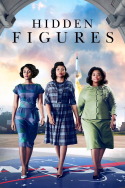
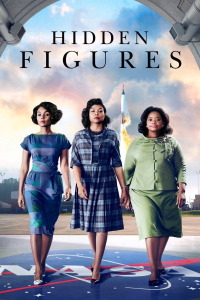
Overcoming racism and sexism all while doing a job is difficult, but especially for the three African-American women featured in the 2016 historical fiction film Hidden Figures. Loosely based on the novel ï¿ 1/2 1/2Hidden Figuresï¿ 1/2 1/2ï¿ 1/2Â? and actual events, the movie follows African-American NASA (Formerly known as NACA) human computers, Katherine Johnson (played by Golden Globe-winning actress Taraji P. Henson.), Mary Jackson (played by singer, songwriter, and actress, Janelle Monáe), and Dorothy Vaughan (portrayed by Oscar-winning actress, Octavia Spencer.). The three women face racism and sexism throughout the movie, encouraging others to fight for what they believe in, work hard, and take a stand. The cinematic gem features a star-studded female cast that makes Hidden Figures a true work of female empowerment in Hollywood, changing the movie from decent to excellent.
The 2016 historical fiction movie highlights the racism and sexism of the 1960s. The main three characters, Katherine, Mary, and Dorothy, know this all too well. Katherine becomes a human computer in the year 1961 in the film and experiences racism as well as sexism in the workplace by the fictional character, Paul Stafford. portrayed by Primetime Emmy-winning actor Jim Parsons. Stafford is Katherine's co-worker, and the two are not the best of friends when she arrives. Katherine is often told that she is not fit to be in her position, a useless employee and among other racist and sexist remarks. Parsonsï¿ 1/2 1/2(TM) character ï¿ 1/2 1/2shows audiences the symbolism of sexism and racism in the 1950sï¿ 1/2 1/2ï¿ 1/2Â?. (Hollywood vs. History) The characters portrayal gives us the emotion and depth needed to make Katherineï¿ 1/2 1/2(TM)s character work harder than before to prove she belongs, giving viewers a real cinematic view of female empowerment.
Actresses, Janelle Monáe and Octavia Spencerï¿ 1/2 1/2(TM)s characters are no stranger to discrimination as well. Their characters Mary Jackson and Dorothy Vaughan show the female audience empowerment. Mary Jackson is a female engineer and computer who takes her career to new heights when she goes to court for fighting for something she believed in. When Jackson is denied access to further her education because she is an African American woman, she takes a stand and petitions the court to level the playfield. Janelle Monáeï¿ 1/2 1/2(TM)s acting skills in these scenes give audiences the emotion, pain, and triumph needed to make her character embody a pure work of female empowerment. Dorothy Vaughan does the same as well when being chosen for re-assignment. Vaughan faces a difficult decision and must choose between herself and her fellow computers. Vaughan declines the re-assignment and gives her supervisor an ultimatum that she can only take the job if she can bring her equally qualified co-workers with her. This provides fans that female empowerment and diversity element that we need to see more of in Hollywood. Vaughan doesnï¿ 1/2 1/2(TM)t only take the promotion for herself but expands the job to include her co-workers. Vaughan shows viewers that one African American women advancing in the workforce is a great achievement, but multiple African American women moving up in the male-dominated workforce is true female empowerment for all.
Altogether the Film Hidden Figures is an outstanding film that all ages should watch. The cinematic gem gives audiences a perspective of female empowerment and diversity rather than historical fiction, making it a stellar film for all audiences to enjoy.
This review of Hidden Figures (2016) was written by Katie S on 06 Dec 2018.
Hidden Figures has generally received very positive reviews.
Was this review helpful?