Review of Happiness (1965) by Edgar C — 06 Aug 2014
Unfaithful Husband: I was afraid you'd say the first time is a surprise, the second time, it's habit. Every day is a new day.
Female Lover: Are you happy at home too?
UH: Very happy.
FL: Your wife is not a habit?
UH: No. I love her very much. We get along, we have fun. And there are the kids. Surprises every day.
FL: And me?
UH: I met you and I love you.
(Lover smiles and kisses the husband).
I do have a serious issue with how fantastically everything happened. My credibility is down the floor. The whole first half is terribly difficult to believe.
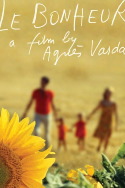
We open with a picturesque family picnic. Literally, everything is pretty. The husband is handsome. The wife is beautiful. The children are small and pretty. The day is sunny and blue. Freaking bees fly happily and fornicate with sunflowers. Oh damn, is everything pretty!
By this time, I was scratching my head. Is this a symbolic movie? Will a surprising punch occur afterwards, like in the second act? Will the bees die? Or is this really an idealistic representation of unbearably clichéd family happiness at its maximum capacity?
But then I stopped and said to myself: "Calm down. The movie has just lasted 6 minutes by now. It is Agnés Varda, the grandmother of the New Wave we're talking about! Have faith and stop with the rushed conclusions." I, therefore, waited patiently, looking at the clichéd imagery.
Out of the blue, the affair begins. Why! Am I supposed to beli.... "Wait", I had to speak to myself again. "Don't things normally happen like that in life? Out of the blue? Give the movie an hour more. Maybe the reasons will be revealed later. There's an hour left of potential character development." And so, I waited watching captivating sex scenes.
And then, that piece of dialogue initially quoted happens. I hated the film. I wanted to turn it off. Thank God for my #1 rule in cinema watching: "Never leave a film unfinished", so I endured, despite my frustration. Maybe it was me who was being impatient. But I had already seen more than half of the film. That's seriously bad.
What the second half unleashes is of special value. The lover declares how she has been seeking different forms of happiness, like if this term could have several definitions for the same person at the same time. That is a very interesting questioning. Subliminally, it is suggested that both the husband nor the lover are happy, and are resorting to an immediate solution of tangible pleasure. Here is where sexuality plays its role. The way it is portrayed is hauntingly absorbing, entirely emotional and very revelatory. Sexuality is a tool used to explain more than words did. That is an admirable stunt in my book, and something that female directors normally achieve more easily.
The amount of ideas presented in the last 12 minutes is just shocking. How extraordinary that the whole twist and the thematic content invading those eternal closing 720 seconds can be subject to such a fascinating debate. Suddenly, the film redeemed itself, offering a truly horrifying ending (in the good way) disguised as another idealistic fantasy of positive overtones. I was disturbed. What a brilliant move!
I am angry at this film, because a horribly unrealistic first act was meant to justify the enygmatic and very realistic content of the second, but it doesn't. At all. The second act itself is a thematic masterpiece that rises several relationship questionings to the surface. It was an admirable move. Why was it necessary to endure a questionable show beforehand? A good movie is not supposed to reward a viewer for endurance tests, but to be consistently engaging.
When Varda was criticized because of using "unrealistic hues", she replied that the hues she chose were the ones that psychologically best suited her story. I believe she believes that. Unfortunately, that is a lie.
Before the fans try to tell me that it can be seen as a surreal experience, or merely symbolic, that won't work. Surrealism is entirely a different issue. I won't baptize anything as "surreal" or "symbolic" for justifying mistakes or issues of credibility.
I just feel like Varda cheated on me.
66/100.
This review of Happiness (1965) was written by Edgar C on 06 Aug 2014.
Happiness has generally received very positive reviews.
Was this review helpful?