Review of Hang 'em High (1968) by Van R — 17 May 2010
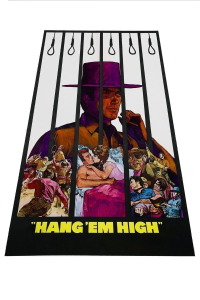
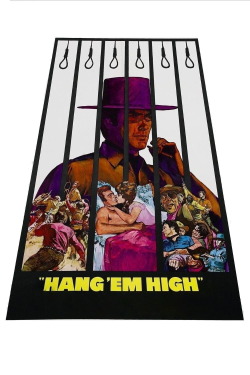
Director Ted Post's "Hang'em High" qualifies as Clint Eastwood's worst western. This United Artists release served as the first Eastwood western after Sergio Leone's "The Good, the Bad, and the Ugly." Composer Dominic Frontiere's powerful orchestral score ranks as the best asset and enhances the predictable Leonard Freeman & Mel Goldberg screenplay about western justice. Frontiere composed the scores for "The Invaders" and "The Rat Patrol." His score to the Lee Van Cleef western "Barquero" sounds like variations on his "Hang'em High" theme. Mind you, Eastwood looks cool as a glacier in his dark blue outfit and flat-brimmed hat, and he kills bad guys but "Hang'em High" resembles a tautly made television drama. The surroundings, even the sandy desert scenes, lack the majestic sprawl of his Italian westerns and the westerns such as "The Outlaw Josey Wales," "The Pale Rider," and "Unforgiven." Clearly, since he hadn't made a strong enough impression on Hollywood, Eastwood had to play it safe with a low-budget and actors more accustomed to appearing in TV westerns.
No, "Hang'em High" was NOT a Spaghetti western. Lensed in Southern California, this thoroughly routine oater springs its one and only surprise when our hero gets his neck stretched in the first scene. Jed Cooper is a former-lawman-turned-cattle-rancher wrongly hanged for rustling who survives the ordeal. "Hang'em High" focuses primarily on the theme of revenge that figured prominently in most Italian westerns. The lynch mob found our hero after he had bought cattle from a rancher who has been murdered. No matter what Jed says, Captain Wilson and his nine conspirators refuse to believe him. It later turns out that the man who killed the rancher gave Jed (Clint Eastwood) a forged bill of sale. This is what prompts the villains to see Jed swing. Cooper finds himself briefly imprisoned after a tough-as-nail lawman, Marshal David Bliss (Ben Johnson of "Rio Grande") cuts him down and takes him back stand trial at Fort Grant before the stern Judge Adam Fenton.
Judge Fenton (Pat Hingle of "The Gauntlet")is a quasi-Judge Roy Bean. He has the last word on justice and Hingle delivers a commanding performance. The villains led by Captain Wilson (an elderly Ed Begley of "Boots Malone") are an ineffectual lot. They botch hanging Jed Cooper and he comes after them with warrants issued by Fenton. As much as Fenton warns Cooper that he better bring the hanging party in, Cooper winds up killing several of them. The town where all the action occurs has another character Rachel Warren (Inger Stevens of "Five Card Stud") who has permission from Judge Fenton to look at all new prisoners. She looking for the fiends that did her wrong. The romantic love story between Jed and Rachel is as contrived as most of this weak western. Meanwhile, Jed realizes that Fenton may be a bigger bastard than he is with his iron-fisted rules about legality. In his spaghetti westerns, Clint Eastwood bowed to nobody, but his lawman character here takes orders, something that clashes against the Eastwood characters in "Two Mules for Sister Sara" and "Joe Kidd.".
The worst casting decisions is unquestionably Alan Hale Jr. as one of Wilson's riders that hangs Cooper. The portly Hale was too closely identified as the Skipper from "Gilligan's Island" to be believable as one of the villains. One of the best casting decisions was veteran B-movie cowboy star Bob Steele as one of the hanging party. Meanwhile, Bruce Dern makes an excellent villain. "Hawaii 5-0" actor James MacArthur makes a memorable impression as the Preacher on the gallows. Dennis Hooper and a line-up of familiar faces, including L.Q. Jones of "Battle Cry" and Ned Romero of "Dan August" flesh out the cast. Not surprisingly, Hooper plays crazy prisoner called 'The Prophet.' There are no cool looking shoot-outs because Ted Post shoots everything like one of his "Gunsmoke" or "Rawhide" episodes. The scene where Jed is riddled with bullets and Rachel has to take care of him adds a tearjerker text to the story. Happily, Eastwood would go on to make "Two Mules for Sister Sara" and redeem himself for this lackluster effort. The neatest touch in the entire movie is when they hang a number of men and one of them losing a boot. Only western movie completists and die-hard Eastwood fans should waste their time with this one.
Happily, Post's next outing with Eastwood would come with the highly superior "Dirty Harry" sequel "Magnum Force." If you're looking for a better lynch law western, try out "The Ox-Bow Incident" with Henry Fonda.
This review of Hang 'em High (1968) was written by Van R on 17 May 2010.
Hang 'em High has generally received positive reviews.
Was this review helpful?