Review of Guns at Batasi (1964) by Donnacha F — 21 Apr 2017
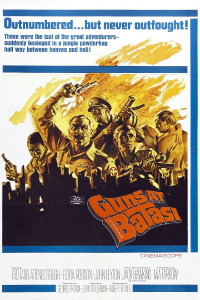
"Guns at Batasi" is an interesting film that escaped my attention at the time it came out. I was living then at a boarding school in Beirut, Lebanon. Many British and American films played in the cinemas there, and we students were permitted to go, so I saw many movies back then. It's possible that "Guns at Batasi" was not distributed in Lebanon; it's not the sort of film that was common in the large movie houses in those days before multi-screen cinemas.
Richard Attenborough stars as Sgt. Major Lauderdale, commander of a regiment of mostly bored British soldiers who spend nearly all of their time partying, hanging out at their mess hall, and pretending to be real soldiers. Then the government of the fictional British colony they inhabit is overthrown in a coup d'etat. The plot raises many questions about the rights of indigenous people and the ethics of colonialism, but none of the questions is ever allowed to be answered. Perhaps that was too introspective for the early '60s.
Attenborough was at his most pompous in this film (made 29 years before his turn as the flawed genius creator of"Jurassic Park"), so it was fun to watch him bloviate. I've always suspected that Sir Richard would have been insufferable in his schoolboy days and that young Richard spent a lifetime preparing for this role. He was 40 at the time it was shot.
The situation depicted in the film - an indigenous people throwing off their colonialist masters - is certainly relevant today. This same story, if filmed today, would undoubtedly be more violent and less genteel on both sides of the conflict. The idea that revolutionaries would still obey the absurd demands of the outnumbered British authorities would bring mocking laughter today. So one must consider this aspect of the plot in the context of African independence movements of the time when terrorism was barely in anyone's consciousness.
The feeble attempt at a romantic storyline seemed intended for the sole purpose of inserting a pretty girl into the film. Mia Farrow in her very first film role didn't get to do much, and her lover (a Private Wilkes, played by John Leyton) was vapid and dull. I wish they had abandoned this subplot unless they intended to do more with it, which was impossible in a film like this.
This film is enjoyable if considered in the context of the time at which it was made and if one is an Attenborough fan. It's in black and white, which helps to give it an historical feel.
This review of Guns at Batasi (1964) was written by Donnacha F on 21 Apr 2017.
Guns at Batasi has generally received positive reviews.
Was this review helpful?