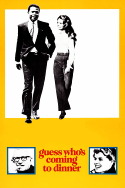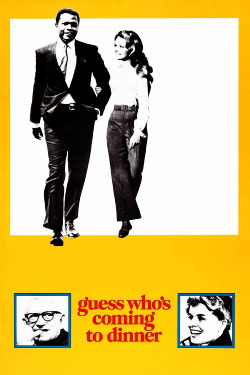
Review of Guess Who's Coming to Dinner (1967) by Ahmedaiman1999 — 28 Feb 2019
It would be completely understandable if anyone criticized this movie for playing it very safe after taking some severe risks at the beginning, and that in doing so the story not only became progressively formulaic; but the characters appeared to be stereotyped and, worst of all, self-contradictory and inconsistent.
That said, the acting here is undoubtedly more than enough to overcome these issues and redeem them, nay, to totally justify these seemingly nonsensical changes and alterations that happened to some of the characters, most noticeably Matt and Christina Drayton. I have seen a lot of great performances that are able to elevate the characters and even the entire movie in general. But, frankly, I have never seen any performance, no matter how superb it may be, that can convince me of what I considered an unmistakably major flaw. What makes me appreciate the acting, in particular, in this movie is that it opened my eyes to some hidden underlying themes of the movie's story, which are more than fundamental to understand the movie properly. If the fabulously realistic and sincere performances, somehow, didn't do the same for you, I suggest you try you figure out some key themes to consider them as you're watching the movie. Two of the most important themes are; the late resurgence of the inherited awful traditions and beliefs, and the undiscovered hypocrisy. Yes, that's how profound this apparently simple film actually is! Of course, the shift in Matt Drayton's attitude could have been executed way more smoothly and maturely; but the abrupt nature of the changes could be fairly, if not quite easily, taken as a reflection of the character's disorder.
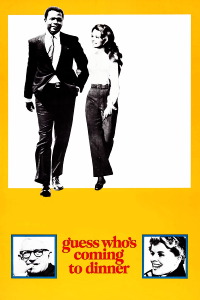
Spencer Tracy, in his final role, gave, for lack of a better word, a mature performance that made his character surprisingly believable despite its outwardly incompatible attitudes that made the character of Matt Drayton seem to be immensely problematic. Sidney Poitier's performance, as the handsome African-American Dr. John Prentice, is solid, steady, committed, engaging and relatable at the same time. Katharine Houghton captured the rebelliousness, impetuousness, and also the innocence of her character, Joey, so perfectly. She reminded me quite a bit of another Katharine; Katharine Ross as Elaine Robinson in The Graduate, which was, also coincidentally, released at the same year, 1967. But it's Katharine Hepburn who stole the show here with her Oscar-winning performance that I personally consider as one of the best low-key performances in a leading female role I've ever seen in film!
I would be lying if I said that I found the second half of the movie half as entertaining and riveting. Nevertheless, the dialogue was much better at the second half (the final monologue is simply remarkable!) as it was at the first, which is noticeably elevated by, once again, the incredible acting.
The movie is decidedly filled with stereotypical characters, but the only one that bothered me is the maid, Tillie, whom I didn't find to be funny at all; actually she is quite annoying. Her character's motivations and attitudes are justified, though.
Guess Who’s Coming to Dinner is an essential classic 1960s film, and one of the best films that examine prejudice and racism; it tackles its weighty themes with surprising depth, humor and breeziness. It's also very relevant nowadays. And there is no doubt that it has major influences on hundreds of movies that came after it, especially today's.
(8.
This review of Guess Who's Coming to Dinner (1967) was written by Ahmedaiman1999 on 28 Feb 2019.
Guess Who's Coming to Dinner has generally received positive reviews.
Was this review helpful?