Review of Green Zone (2010) by James B — 23 Feb 2011
As foolishly obvious as it may sound, war is confusing, especially in a modern age where conflicts are characterized by regime changes, insurgencies, and guerilla tactics rather than formal declarations of war between openly clashing nations. The lack of one single agenda, as well as hazy distinctions between enemies and allies, thickens the fog of war and leads to potentially counterproductive actions that serve political rather than military goals. It almost makes one long for the 18th and 19th century convention of colorfully uniformed soldiers lining up in rows and taking turns firing single shots across the way. It may have generated bloodbaths but at least it provided clarity. Green Zone is most effective when portraying the nuances and ambiguities of a modern, politically-inspired war fought halfway around the world against a culture we donï¿ 1/2(TM)t understand in an attempt to achieve an uncertain goal. Unfortunately, instead of just depicting the morass and letting the chaos speak for itself, the film sinks under the weight of the scriptï¿ 1/2(TM)s preaching.
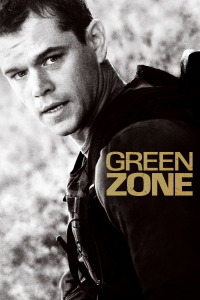
Matt Damon plays Chief Miller, an Army Sergeant who leads his unit around Baghdad during the early weeks of the war in search of potential WMD storage sites. He grows frustrated after repeatedly coming up empty, reporting to his supervisors that there is an obvious disconnect between intelligence records and what actually exists in the field. These officers dismiss his concerns, telling him to carry out his orders rather than worry about where the information comes from. CIA operative Marty Brown (Brendan Gleeson) witnesses Millerï¿ 1/2(TM)s dissatisfaction and recruits him for an ï¿ 1/2off the reservationï¿ 1/2? mission in which he must hunt down a top source of WMD intel to find out whatï¿ 1/2(TM)s really going on. As we all know, WMDs were never found after the 2003 invasion; Green Zone explores what may have unfolded as participants began to realize the impetus for war was false, and perhaps falsified.
This film lives in the crevices of war. While there are gunfights aplenty, the soul of this story lies in the governmentï¿ 1/2(TM)s organizational flowchart rather than on the battlefield. It shows us how competing viewpoints cross swords in a warzone and reveals the bureaucratic power plays that occur behind the scenes. This prioritization of the organizational side of war over the operational side is one element that makes Green Zone more Syriana than The Hurt Locker. Itï¿ 1/2(TM)s less a war film than a political thriller. Green Zone also treats its soldier protagonist differently than most military characters. Many combat films depicting Middle East conflicts focus on the everyday lives of soldiers and their motivations: camaraderie, serving their country, getting home. These depictions are common because they reflect the human side of war and because itï¿ 1/2(TM)s the truth; those motivations are indeed prevalent among members of our military. This perspective is represented in the film, briefly, by one of Millerï¿ 1/2(TM)s peers who appeals for him to focus on their orders rather than veering off on an extemporaneous and self-assigned mission based on a local manï¿ 1/2(TM)s unsolicited tip. This fellow soldier is ignored because, although he doesnï¿ 1/2(TM)t state it directly, Miller aims to serve a higher purpose, one that exists outside the chain of command. He is inspired to make the world a better, safer place and views military service as a means to that end. There is no talk of enlisting out of economic necessity, a girl waiting for him back home, a younger sibling he wants to see grow up. The man is on a mission and he takes individual ownership of goals that far exceed his rank, striving to do something altruistic and more productive than just ï¿ 1/2his jobï¿ 1/2?. But he isnï¿ 1/2(TM)t naïve either. Heï¿ 1/2(TM)s fighting to uncover the truth but heï¿ 1/2(TM)s ultimately a pragmatist willing to do whatever works for the situation. Miller is the type of man who would thrive in a less ossified organization that looks at the world through a wider lens, hence his recruitment by the CIA agent.
Green Zone is a technically proficient film, the type of production we expect from director Paul Greengrass, who helmed the second and third installments of the Bourne franchise. He knows how to put you in the middle of the action while telling a compelling story that trusts the intelligence and attention span of its audience. Known for his handheld camerawork, journalistic zooms, and rapid-fire edits, few filmmakers can better create an atmosphere of urgency. Baghdad truly comes alive in his hands (even if Morocco is the stand-in). Additionally, the cast is strong, even if Damon sports the same affectless, mission-oriented, human-Terminator persona that he brought to his Jason Bourne character. Greengrass and screenwriter Brian Helgeland err, however, by cramming in awkward sermons about the warï¿ 1/2(TM)s justification and mismanagement. Scenes in which Miller shames a journalist and confronts a political manipulator belie the intelligence and subtlety that generally characterize Greengrass stories. When an Iraqi civilian takes matters into his own hands in the third act, his reflective comments are the type of message overkill that is rare in a Greengrass film. When thereï¿ 1/2(TM)s only one conclusion to draw, it doesnï¿ 1/2(TM)t need to be said. I expect more from a director who, with United 93, managed to tell an exceptionally heroic story while avoiding the maudlin beatification that could have easily accompanied that depiction. It was a less obvious and surprisingly unHollywood approach, but one that enabled him to craft the most powerful film of the last decade.
Itï¿ 1/2(TM)s unfortunate to see a well-made film descend into cynical grandstanding that, while possibly grounded in truth, is ultimately fiction. Green Zone doesnï¿ 1/2(TM)t exactly rewrite history, nor does it claim to be a documentary or ï¿ 1/2based on a true storyï¿ 1/2?, but because the script is adapted (loosely) from a nonfiction book, and because of Greengrassï¿ 1/2(TM) verite style, audiences are led to believe that what happens on screen is a reasonably accurate portrayal of what took place in the weeks following the Iraq invasion. Yet the script fills gaping holes in the historical record with conjecture, making it guilty of the exact veracity crimes condemned by its protagonist. Greengrass similarly constructed United 93 but that story differs in that we will never know exactly what happened on that plane, which gives the filmmakers greater license to use best-guess fiction in its depiction. What responsibility does Hollywood have in this arena? If Miller chastises a Wall Street Journal reporter for not seeking verification before running with a WMD story handed to her by a hawkish administration, what would he say about a piece of entertainment that passes off a hypothetical as quasi-historical?
This review of Green Zone (2010) was written by James B on 23 Feb 2011.
Green Zone has generally received positive reviews.
Was this review helpful?