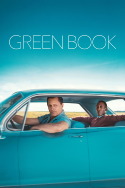
Review of Green Book (2018) by Trevorsview — 27 Dec 2018
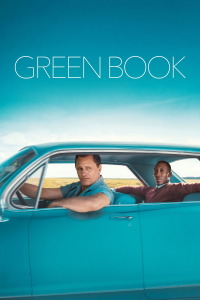
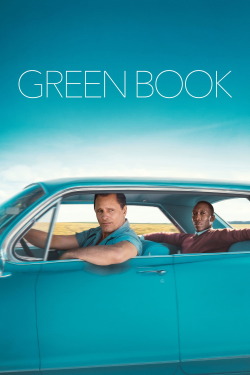
Meet Frank “Tony Lip” Vallelonga, who back in 1962 was challenged to remain upright alongside greater authority against his will, except that isn’t clear from the shallow focus of Green Book. The real Tony had a marriage much like Clark Gable teaching Claudette Colbert how to hitchhike, but the crunched cinematic events with Tony’s wife, Dolores, move too quickly. Rather, focus falls more on getting to know Tony through travelling musician Don “Doc” Shirley, whom he drives across the country as his personal chauffer.
While Tony takes on a stereotype reversal against his Italian blood, Dr. Shirley goes against Black stereotypes by his consistent calmness. Plus, the thinner Black companion writes better than the pudgy Italian, who is more familiar with Black musicians than the Black man is. By that retrospective, the Italian is internally Black, and the African is internally White. While Dr. Shirley loathes the prejudice of his new friend, he asks what defines “Blackness,” which turns out quite effective for us viewers to hear. So henceforth, dumb and smarter progress on a journey full of Kentucky Fried Chicken while everyone back at Tony’s home eats clams on spaghetti, all where you ache to see the resolution.
Between each person, both from the ensemble and two leads, the details guarantee chuckles. One of those humorous touches that fuel the teal Cadillac toward its warm finale includes when Tony folds an entire pizza in half, then chomps down onto it, big. Even if counting the more dramatic moments, small moments put you on its side. These moments kick off instantly with a performance of, “That Old Black Magic” to open the feature, and the momentum of this small moment collection continues without halt.
Yet here’s the problem with this well-meaning story structure: no big moment ties any reasonable story arcs together. From the main arc of Tony left in his own little universe, it just makes everybody else impossible to connect with, especially Dolores, who never succeeds to teach her husband anything valuable. While Don has the advantage of flaunting way more screen time, he’s no easier to relate to since he almost matches Jesus-levels of moral perfection, even though he’s clearly not. Case in point: this “king of the jungle” keeps ivory tusks as trophies, suggesting an engagement in illegal animal poaching.
It’s particularly weird how this film aims for a PG-13 rating; there’s no reason for it to do so, for its lack of inappropriate content doesn’t mean teenagers will overlook the cheap production values. They’re still used to watching televised recreations of their own drama; most of them aren’t ready for a story like this. As for the parents, the moms won’t take such a boring character like Dolores seriously, since her makeup in bed after waking up still looks perfect! Many dads also won’t relate to Tony’s type of masculinity very well—one that always has a cigarette in his mouth of missorted life priorities. His pompous ego that shines through the symbolism of a stolen jade rock supposedly gets a change of heart once he listens to Don Shirley’s traveling band, except that impact is not felt from the audience’s perspective; the band in truth is about the same amount of fun to listen to as any old street musician.
Many other missed opportunities prevent this picture’s intentional importance from resonating long term. Throughout his travels, Tony writes down that he is basking in the beauty of the US south… beauty that by the way seldom reveals itself to us viewers, as the image often lets a map visual take up space. It’s not just stylistic inconsistency that’s the problem, other glossed-over narrative points are missed to their advantage, particularly one hot dog eating contest. Among numerous incomplete philosophies that just fill up page space without a payoff later, one said by Tony includes, “whatever you do, do it 100%.” Pretty deep, ain’t it?
At the end of the day, most of the characters in this feature just act racist without justification as they themselves become offensive caricatures, such as one White manager at a theater who refuses to clean a piano for Dr. Shirley’s performance. This overall attitude loses the impact upon Tony’s sin as racial connections overbear the focus in a way that feels manipulative rather than personal. Such shame-filled preaching lacks subtlety, particularly in a poorly executed scene when the Cadillac car breaks down beside the glares of Black field workers, a scene that served no real plot purpose.
At this point, a boy taking out his anger through an imaginary tree monster would be better to watch than the skimmed long-stretching beauty of Green Book. I believe Mr. Vallelonga’s story might have been better if Participant Media focused more time on his home within the Bronx, that way we could see how Tony’s unemployment affected others around him.
This review of Green Book (2018) was written by Trevorsview on 27 Dec 2018.
Green Book has generally received very positive reviews.
Was this review helpful?