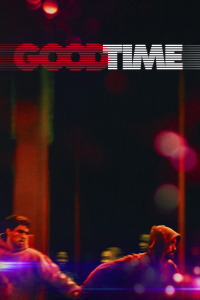
Review of Good Time (2017) by Ben D — 25 Jan 2018
It's hard to pinpoint why thrillers have such a hard time resolving their story in a satisfying way. Mediocre films of other genres seem to be able to conjure up endings that at least wrap up their narrative while remaining tonaly consistent to the rest of the film. Romances have either the cheesy-happy ending or a bittersweet truth. Dramas usually resolve themselves in quiet introspection or in showing that preservence pays off. Comedies go for the heartfelt, feel-good, and action movies have the traditional case where the good guy triumphs. I don't know what it is about thrillers that makes them more difficult to end in a way that satisfies viewers. Perhaps it's the lack of slower, more character focused moments in favor of having more "adrenaline fueled" scenes. Ultimately, this means that the resolution the characters receive in the end bears no influence on how we feel, for there's no connection made between the audience and the protagonists. It is a pervasive problem that seeps its way into the majority of thrillers, but every so often there is an exception.
Good Time is 2017's thriller with heart. The plot of the film is entirely set up within an effective and efficient first 20 minutes. The rest of the film is all one big reaction to the morally sympathetic quandary established in the beginning. The film follows the 'slippery slope' story structure wherein the protagonist, Connie, portrayed by a career defining role for Robert Pattinson, relentlessly strives towards one goal, and with every step, only slips more uncontrollably down the slope. The plot is simple and quite effective as a vehicle that shows us the seedy underbelly of a neon bathed New York. Another one of Good Time's many strengths is that it refuses to let the logic that grounds the film deteriorate. The film understands that the realism it adheres to allows connection and sympathy to be made with the main characters. Never does the film seem too crazy to believe. The Safdie brothers carefully craft scenarios in which we can't help but both agree and be simultaneously disgusted with the actions taken in the film. Good Time is an impressive exercise in controlled and reserved storytelling. Despite the apparent lack of a well-defined story, the film never becomes unintelligible chaos. Much like the plot, the myriad of equally diverse, but equally interesting characters always feel real enough to actually have been random New Yorkers. The co-director, Benny Safdie, gives a shockingly honest performance as Connie's mentally challenged brother. Jennifer Jason Leigh, Buddy Duress, and Barkhad Abdi all turn out great performances making them feel more like real New Yorkers than real New Yorkers do.
The gray palette of modern, "realistic" thrillers is swapped out in favor of a brightly saturated neon that pierces the nighttime cityscape. This combined with the use of handheld cameras and plenty of close up shots allows the film to be both beautiful and harsh. The aesthetic of the film lends itself to assembling a magnifying glass under which the human flaws of the characters are starkly illuminated by the jarring neon. Accompanying the great visuals is a techno score that keeps the movies pace and tone consistent.
After seeing the movie for the first time, I pondered the ending. Right away, because of that, I knew the ending was something more than just your average ending to a thriller. The endings of most thrillers don't make me think, or ponder. The ending of Good Time isn't a ending that asks a question about whether or not the protagonist is morally justified in his actions. Instead, Good Time unflinchingly declares that Connie's actions were wrong and doesn't even bother with any pretentious ambiguity. So why was I pondering the ending if it was so clearly defined in the movie? Because unlike most thriller, Good Time doesn't attempt a nice, tidy ending where everything is wrapped up cleanly. The ending of the movie isn't the ending of the characters wanted. It's an ending that arrives with a reluctant exhaustion as daylight breaks over New York. Robert Pattinson's weary face shows that he has no more running away left in him. He knows what he did was wrong, but we also know that he would probably do it again if he was given the chance. The final question that is posed to the audience is a simple, "what would you do?" question. It's a confounding final question because we realize, much like Connie, it's hard to answer the question when there are no right answers.
This review of Good Time (2017) was written by Ben D on 25 Jan 2018.
Good Time has generally received very positive reviews.
Was this review helpful?