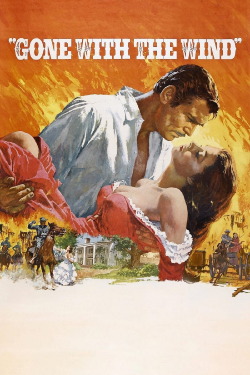
Review of Gone with the Wind (1939) by Reid V — 16 Mar 2012
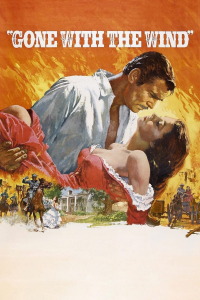
After years of pushing this film further and further down in my Netflix queue, I finally caved and gave this much celebrated epic four hours of my life. While I can see why this film has been held in high-regard over the ages, the historian in me rejects it's entire premise.
Right from the introduction, we are told that this time period saw the passing of a great way of life. That the Antebellum South, replete with docile slaves, plantation gentility, & rollicking dance halls brimming with aristocratic romance, is worthy of our nostalgia and it's ruin, our pity.
In reality, the institution of slavery was a system of honor through domination and while not all plantations were ruthless in their treatment of slaves, this mythical remembrance clouds the reality of the situation.
In fact, it not only clouds the reality, but seems to ignore parts of it altogether. The script doesn't even try to make sense of the war, which weighs so heavily in this picture. The Northern army aren't even treated as people. They are described as an "Oncoming Juggernaut." Slaying helpless townspeople & destroying their placid places of worship. While I am not looking for a documentary-style re-telling of events, I would have liked to feel even a modicum of balance. Instead, what the viewer gets is an apocalyptic story of paradise lost.
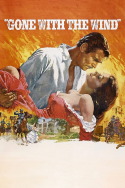
However, if one can separate the history and the fiction, there is at times an enchanting film underneath. The process of technicolor is used to great effect here. Director Victor Fleming & crew deftly contrast these saturated & brilliant colors with a very creative use of shadows.
On top of this, there are some stunning shot compositions for a film created in 1939. One especially notable scene features a crane shot that slowly reveals not only the countless casualties of one small town, but also a tattered and torn Confederate flag that slowly enters the left side of the frame.
Another particularly well-done sequence is the carriage escape through the blazing town. Sequences of this magnitude are especially breathtaking for a time when filmmakers couldn't rely on CGI to bring their stories to life.
While the film has a lot to offer visually, the performances are not of the highest quality. Sadly, it seemed like the activity that our protagonist Scarlett O'Hara partakes in the most, violent sobbing, is the one thing that Vivien Leigh isn't particularly proficient at. Now this wouldn't be much of a problem if, let's say, Leigh wasn't balling for three-quarters of the film. But, with nearly four hours of screen time and the Northern powers seemingly hellbent on her personal ruin, Leigh has myriad opportunities to start the waterworks.
Yet, one can at least be thankful that she has charisma. Her co-star Clark Gable has about as much charm as a bowl of fruit salad.
Needless to say, if you are an Alabama native, despise historical accuracy, admire women with over-active tear ducts, & love a beautiful looking film, then Gone With The Wind is something to be cherished.
This review of Gone with the Wind (1939) was written by Reid V on 16 Mar 2012.
Gone with the Wind has generally received very positive reviews.
Was this review helpful?