Review of Gloomy Sunday (1999) by Zarinah H — 25 Mar 2010
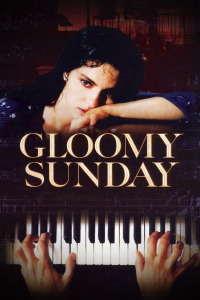
I first heard part of this composition "Gloomy Sunday" in the movie Schindler's List (Widescreen Edition). I believe that the piece was played by Itzhak Perlman. The haunting strains of the music suited the somber tone of the movie which dealt with the Holocaust. In "Gloomy Sunday" the movie, the Holocaust is one of the major themes, together with the themes of love, greed, and power. The title of the movie refers to the musical composition "Gloomy Sunday" which was written in the 30s and became a hit. The music also achieved a certain level of notoriety, as it was said to have driven people to commit suicide after hearing the plaintive tones which seems to seep into one's soul. This musical composition plays a major role in the movie. The story is set in Budapest, Hungary in the 1930s where restaurant owner Laszlo (Joachim Krol) is portrayed as being in love with Ilona (Erika Marozsan) the restaurant's hostess. Men are easily smitten with Ilona, and one of them is the restaurant's new piano player, Andras (Stefano Dionisi) who falls head over heels in love with Ilona. A rather strange love triangle develops with Ilona being attracted to both men and welcoming both into her bed. What is even more amazing is that both men eventually come to accept this arrangement though they're not very happy about it. Then there's a German man, Hans Wieck, who is also captivated by Ilona's beauty and charm and proposes to her - after being turned down, he promptly jumps into the Danube, only to be rescued by Szabo. Hans professes his gratitude to Szabo, promising him they'll meet again - not realizing just how prophetic those words will be. Time passes and Andras creates the haunting composition "Gloomy Sunday", though he is none too pleased when he realizes the devastating effect it has on some of the listeners.
World War Two breaks out and the Nazis invade Hungary - who should show up in Szabo's restaurant but Hans Wieck, who is now a high-ranking SS officer driven by greed and apparently lust as he still finds Ilona attractive. Things begin to get worse for the trio as Andras suspects Ilona of carrying on an affair with Hans, whilst Szabo finds his Jewish heritage might be his undoing as the Hungarian Jews begin to get deported to the camps. Will Wieck save Szabo, repaying the debt of life, or will the Nazi allow his mercenary instincts to take over? What becomes of Andras, Szabo, and Ilona? The movie's various story arcs weave together to tell a compelling and credible tale of passion, doomed romance, greed, fate, and tragedy. The lead actors portray their respective roles with depth and insight, and my particular favorite was Joachim Krol's Szabo - cheerful and optimistic, generous with his love and friendship, yet ultimately realizing his own inner flaws. The final twist in the movie left me feeling a sense of satisfaction even though this is a mostly bittersweet drama. "Gloomy Sunday" has become one of my favorite movies of all time!
This review of Gloomy Sunday (1999) was written by Zarinah H on 25 Mar 2010.
Gloomy Sunday has generally received very positive reviews.
Was this review helpful?