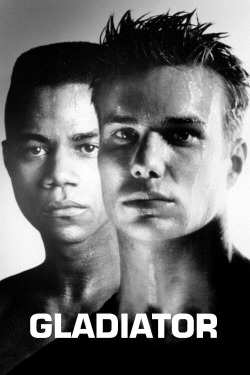
Review of Gladiator (1992) by John W — 10 Jan 2015
For the longest time I've wondered what it was about this film that so instantly both clicked with me as much as it has. To the point that I hold it up as one of my all time favorite movies. I only saw it for the first time at the beginning of 2013 (in a double feature with "Braveheart" which clicked the same way for me, but is not the subject of this review) but watched it quite a few times over the following year. I guess it's just because for me it does have it all as a movie. Wonderful production values, a superb cast, viscerally exciting action scenes, and a great story to back it all up. Like in the case of other acclaimed Award Winning films of the time that preceded it like "Braveheart" and "The English Patient" the filmmakers have a clear affinity for the grand epics of Hollywood's Golden Age. Feeling like love letters to that era so to speak. One critic calling this film a "nostalgic synthesis" of all those that came before. There is some truth to that, but the way it's all put together is masterfully done in such a way that it stands on its own two feet and comes off as its own tale. Particularly how it in part tackles a theme/subject that none of those other films touches on. Which is essentially the power of entertainment.
Everybody has talked up the film's action scenes, cast, and sumptuous production values before. But what often times gets lost in the shuffle for some is its story, which as I implied before I think more than matches everything else around it. The film touches on how the entertainment medium has been and is still used by those who seek to misdirect and manipulate the masses. As Commodus does here with the gladiator games. Hoping to win the adoration he has felt deprived of (particularly by his father) and also to consolidate his power by subsequently dissolving the senate. Leaving him unchecked by anybody. But the thing that I think is disappointing that many people gloss over is Maximus' character arc. The reason potentially being that it is not presented in a for lack of a better term "in your face" sort of way and is surprisingly understated but present for those truly looking at it. His story is of a great man of strong moral character who loses everything and is torn down to one of the darkest of places. He wavers, struggles with his humanity, trust (in both others and himself), and faith. He goes from a great leader (in terms of skill as well as character, given that he's willing to put himself in the same danger as any of his followers as displayed in the opening ) who disdains death (but fights when he feels it's for the greater good), is popular with his peers, and has a loving family waiting for him. However, Commodus out of jealousy and spite takes it all away. Resulting him in being nothing more than a slave who has to fight and kill for mere entertainment rather than a true cause. Becoming (understandably) jaded, cynical, and antisocial. Even starting out with the plan to die. However contending with the task of trying to save Rome given to him by his father figure and mentor still hanging over his head. When many (if not most) people talk about this film, even those who like it, they say Maximus' story comes down to nothing but essentially "revenge is sweet".
And I personally feel that that is missing the point and shortchanging the story, as his arc does say something more meaningful than that. As I was laying out before while the film does not condemn him getting his revenge, as happens in the end, but the factor that's often forgotten is that it is also about him staying true to himself, and ultimately not putting his revenge before the greater good of Rome or those around him. He has opportunities to get his revenge earlier on, but ultimately relents for one reason or another in how it would hurt other things. Which is all naturally connected to the "stay true to yourself" and "don't let terrible circumstances get the best of you" facets of his character progression. He slowly but surely opens up to life again, begins trusting in others once more, as well as proves he can retain his ethics and be true to himself. He manages to become the great general once again in the arena to his fellow gladiators, befriend men whose people were conquered by the very empire he serves (and was betrayed by), and ultimately through his actions inspires others to carry on his cause after his death. In my mind this arc is powerful, universal, and inspiring. As one should strive to overcome even the greatest obstacles they face in life and not compromise who they are because of them. Early on in the film Maximus says to his men, "What we do in life, echoes in eternity" which opens up the theme of how ones actions in life are truly important. Maximus managing to hold true to that in the end.
What works great is that his strength of character is juxtaposed to others giving into their worst impulses. Illustrated the most through Commodus in his desperate attempts to win both attention and affection. Not being able to win the love he wanted before from his father, he seeks to fill the void with that of the people no matter how flaccid it may ultimately be. And he's willing to throw away human life through the gladiator games in order to achieve this. And was willing to even go so far as to try and "have" his sister to fulfil a perverse base/carnal desire of his. But the mob also reflect this in how they eat up the violent spectacle.
It is also notable that an arc of getting over one's cynicism and helping the greater good is also paralleled in the character of Proximo as well. In a film about gladiators it would have been really easy to build a loose framework of a plot just to go from one action sequence to another. Here they went the extra mile and not only developed a great story around it all, but made it so that the action sequences furthered both the narrative and character progression. In the end his strength of character and faith are ultimately rewarded, not only with allies continuing his cause but getting to see his wife and son again in the afterlife. While it is not purely a religious film, that part of it is certainly spiritually astute.
This review of Gladiator (1992) was written by John W on 10 Jan 2015.
Gladiator has generally received positive reviews.
Was this review helpful?