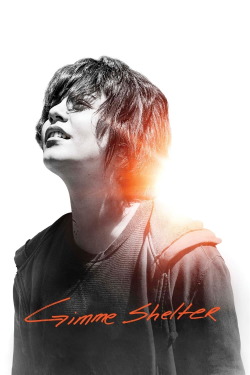
Review of Gimme Shelter (2013) by Edith N — 03 Feb 2010
Where the Sixties Came to Die.
Just as a warning, I don't actually care for the Stones. Their music doesn't really do anything for me, and their attitude is just kind of tiresome. Mick and Keith have both appeared in things that have amused me for other reasons, but that was parody. Mick Jagger strutting around the stage reminds me of a rooster, not the Raging Sex God he intends it to. There are other people in the band, I know, but so far as I'm concerned, there is Mick and there is Keith. I know Mick wrote a song presumably for Angela Bowie, but I'm not sure I've ever heard it. I can reliably name about three of their songs. IMDB told me what song I should be listening for to see the part I was watching this movie for in the first place, but since I didn't know what the song even sounded like, that wasn't the most helpful thing in the world. In short, this will not be the review of a fan.
In 1969, the Stones did a not-farewell tour. They were one of the biggest acts in show business, and they decided that making a documentary of their concert experience would be pretty cool. The Beatles were doing it for making an album (I'm not sure about the sequence of events, there, as to who made the decision first), and it was just the thing to do, I guess. At first, it seems like it's not going to be a big thing, but the film assumes you know it's going to after all. Much of what it shows you is the planning for a free concert, eventually to be held at the Altamont Speedway in northern California, most recently seen as a test track for MythBusting. We know, though, that Altamont is not going to be the happy, peaceful, mellow Woodstock West everyone is hoping for, and the film spends more time on lead-up to its most notorious event than anything else that happened, despite the fact that it is still, at least theoretically, about the entire tour.
Actually, that notorious event is the only reason I was really interested in watching the thing in the first place. I read about Meredith Hunter in some true crime book or another, years ago, though of course that version was lurid and exaggerated. It, as well as essentially any other telling of the story, gave little or no mention of the three other deaths on that day, exactly seven years before I was born. Wikipedia doesn't even mention them. They have vanished into nothingness because what happened to Meredith Hunter was so shocking. That night, as the Stones performed "Under My Thumb," eighteen-year-old Hunter was trying to get onto the stage, which Hells Angels were stationed there to prevent. (Exactly what function they held at the concert is uncertain.) There was a fight. Hunter drew a gun. Twenty-one-year-old Alan Passaro pulled him away from the stage, pushed up his gun arm, and stabbed him to death.
Little though I like the Stones' music, I can regret what changes that event wrought on the film. It's kind of sad, really. There are so many great names from the era's music in the film, again, whether you like the music or not. I'm not a Deadhead--I know even less of their music--but there they are, leaving Altamont rather than walk into that situation. Ike and Tina. Jefferson Airplane. It could have been so much about the music and the spectacle that was the Rolling Stones--Mick Jagger and his flappy sleeves and ginormous lips. Keith Richards and the metric tons of drugs. (Oddly, the credits call him Keith Richard.) And, you know, the other guys. It's not a documentary style I'm fond of, but it could have been used well were the story different.
The death of Meredith Hunter and the Death of the Sixties are not the same event, not really. But you can see how they get conflated. People think of Woodstock, when they think of the sixties. They think of that summer weekend, there in the mud and rain, where things were peace and love, man--groovy. Sure, three people died--heroin overdose, appendicitis, tractor--but no big deal, right? Interestingly, the first page of Google searches on "Woodstock death" (I was confirming those figures and causes) is mostly people tallying how many of those performers are still alive; "Altamont death" is all about Meredith Hunter. At any rate, what I think his death really showed was the thump of reality which hit these people as they stepped into the Real World. It was easy to get mad about deaths thousands of miles away, but starting in 1968 with King and Kennedy, deaths came home, deaths of people specific enough so that these people cared about them. Meredith Hunter. Jimi and Janis and Jim. Kent State. No, Alan Passaro didn't kill the sixties that night at the speedway. But they sure weren't in good health by that point.
This review of Gimme Shelter (2013) was written by Edith N on 03 Feb 2010.
Gimme Shelter has generally received positive reviews.
Was this review helpful?