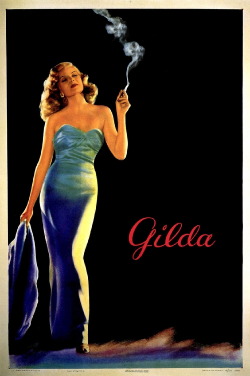
Review of Gilda (1946) by Chré P — 09 Jun 2009
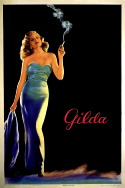
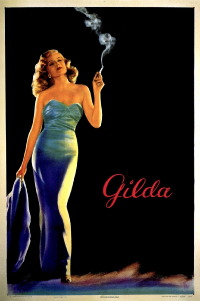
"Gilda", Charles Vidor's 1946 noir, was the film responsible for making Rita Hayworth one of the decade's most beloved sex symbols. In the most memorable scene of the film, she does a striptease while singing "Put the Blame on Mame" in a nightclub. Although she only removes one glove, the scene is perhaps one of the most enchanting and seductive sequences in film history.
Johnny Farrell (Glenn Ford) is a slimy adventure-seeking cheat who uses loaded dice to beat the locals in a casino in Buenos Aires. After the game, he is attacked by a thug and then saved by Ballin Mundson (George Macready). Johnny has not learned his lesson, and now plays blackjack at another casino nearby. Without fail, he gets twenty one in each game after shuffling the deck on his own (which the rules of the table allow him to do). It turns out that the owner of the casino is Ballin himself, and Johnny convinces Ballin that he's a loyal man and would be a good right-hand man for him. Johnny becomes a manager at the casino, and things go smoothly until Johnny is introduced to Ballin's wife, Gilda (Rita Hayworth).
Unbeknownced to Ballin, Johnny and Gilda have a romantic history. We're only given clues, but it's safe to assume that Johnny had walked out on Gilda out of jealousy. Johnny is now extraordinarily bitter and looks at Gilda with disgust. As much as he says he hates her, however, there is enormous sexual tension between the two. Gilda, a tease, alternates between flirting with him and offering equally nasty rebuttals to his insults.
The film takes a bit of an odd turn when we learn that Ballin is fronting for a group of Nazis. Police officers are also in the mix, keeping an eye on both the illegal gambling practices and the Germans lingering around. One day, Johnny and Gilda kiss moments after expressing their hatred for one another. Ballin witnesses the kiss, storms off, and appears to commit suicide via plane crash at sea. The audience sees Ballin rescued, however Johnny, Gilda, and the rest of the employees at Ballin's casino assume he has died. Johnny, as per Ballin's will, becomes the head of the casino and he eventually weds Gilda.
The last act of the film is both silly and fascinating as Johnny, who had been a sort of anti-hero, becomes extraordinarily spiteful and seeks revenge on Gilda. Gilda becomes the feminist hero, whereas she'd been the scheming seductress prior to Ballin's death. Not all of this works, and the last scene is especially corny and implausible, but it's certainly never not entertaining.
"Gilda" is worth seeing for the talents of the three leads, especially Rita Hayworth who takes her place in history with one of the most memorable of all woman performances. The film is beautifully shot, it's settings memorable, and it's starring performance being everything you can ask for out of a lead role. While a bit implausible at times, "Gilda" is an energetic and highly captivating ride.
This review of Gilda (1946) was written by Chré P on 09 Jun 2009.
Gilda has generally received very positive reviews.
Was this review helpful?