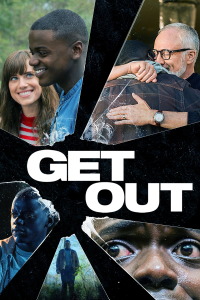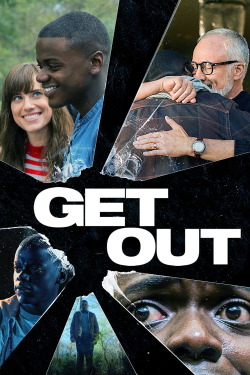
Review of Get Out (2017) by Pipec — 10 Aug 2017
Don't get out!
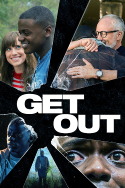
Discrimination, in all its possible variables, is a matter of which it's possible to get very far both in extension and intellection, an issue that has touched various media in terms of attacking this puppet of such evil purposes. Basing on a sad-popular behavior such as racism in the United States of today, filmmaker Jordan Peele—who gained status by TV shows of a comic nature that with the accustomed dubious quality achieved American transcendence—presents a sour, fiery and impetuous social satire brimming with black humor with delicious psychological thriller hint that arrives in order to impact strong on a certain well-off sector thanks to a reflective tale of the big little lies that we tell each other in such a clever, effective and commercial way that might well gets it a list of meritorious titles as "cult film" or "the best suspense movie of the year" and maybe, a round of accolades for its splendid components, identical in quality, different in appearance.
Peele's feature film converges, in not few vertices, with the laudable allegorical representation ("The Invitation", 2015), highlighting as the main concomitant the essence of the true thriller: increasing discomfort and vulnerability sown in order to audience does not feel secure with what happens on the screen, which provokes in this incessant birth of perceptions toward the loaded questions posed by the story. A genre equivalent to a perverse roulette, in which in the slightest moment of carelessness, a rush of revolutions can shake your safety from head to toe. Such concordance adorned with an acute social criticism, substantial of the authentic films inaugurated by Mr. Hitchcock, in which are exhibited the poorest actions that we can come to commit. We're the black and white dots.
While it builds outstanding psychological game with detailedness, Peele, deserving of double mention acting as scriptwriter and director, conjures up ordinary components and other unusual that can be abridged in three major fields: the first one, of course, is the narrative, although, beyond wise skill of developing the subliminal core idea, it's the successful combination and harmonization between two discordant genres as horror and comedy, an impressive achievement especially in the decadent film period in which we are in. While comedy is based on the supporting comic relief gags (adversarially a black man) and the irony of the situations, it's fascinating as horror doesn't require scary monsters or spooky entities to fulfill its objective, here, terror springs up from dread and the veiled significance of the words, from confrontation with the harsh reality. The second one is plausible constituents at a technical level, namely, its mise-en-scène, soundtrack, cinematography, and photography that unite the vertiginous final act with the hesitant first act using, as usual in Jason Blum's company, precise elements that facilitate and enrich the following of the story. It's prodigious in the composition of its images, having in its power a vacation home encircled by a dry forest is not a break, on the contrary, it's sensational as they create beauty, usually in confined spaces, with what they have. With certainty, the film has conceived one of the most beautiful shots in horror film history, an oneiric picture where Chris (Kaluuya) jolts awake after a cyclic hypnosis in a pale leather sofa, with the sound effect from an old TV as the only company, his face—tremendously photographic—raises an analogy through the melodramatic tears in his exorbitant eyes, a frame that will last in the memory of any modern cinephile. There are also sparkling scenes, which reach horns of the moon in its exciting third act, highlighting vigorously camera focus in the third major factor: the overwhelming and heterogeneous performances. Kaluuya's role radiates power and strength, he's sensitive and unprotected when he needed, aggressive and lethal when everything is a disaster. The alienation of the Armitage family is dosed between the competent actors, from which stand out Allison Williams (with a twisted plot worthy of Shyamalan) and her brother in the fiction. Exclusive attention requests scene stealer Betty Gabriel, who plays a couple of shocking scenes, with dimensions of complexity and interpretative depth typical of an acting matron. Be careful because this lady and Kaluuya will present great surprises.
Conscious of its game, Peele's motion picture is a deliberate subversion, offered by the hand of cinema, which cries out for the eradication of injustices perpetuated by the social and political sects of the Trump era. It also breaks supposed barriers between genres and ideas and overflows creativity and power by creating situations as exciting as cartoon-like, as intelligent as reflexive; A satire that wasn't requested, perhaps out of fear, but in the end, it came with a relentless purpose. It achieves what many feature films don't: surprise and affect.
This review of Get Out (2017) was written by Pipec on 10 Aug 2017.
Get Out has generally received very positive reviews.
Was this review helpful?