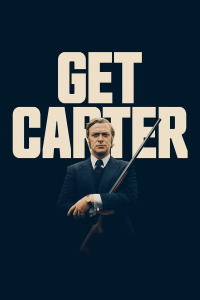
Review of Get Carter (1971) by Ola G — 13 Apr 2017
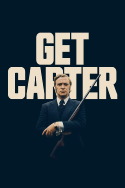
Newcastle-born gangster Jack Carter (Michael Caine) has lived in London for years in the employ of organised crime bosses Gerald and Sid Fletcher. Jack is sleeping with Gerald's girlfriend Anna (Britt Ekland) and plans to escape with her to South America. But first he must return to Newcastle and Gateshead to attend the funeral of his brother Frank, who died in a purported drunk-driving accident. Unsatisfied with the official explanation, Jack decides to investigate Frank´s death for himself...
"Get Carter" is a 1971 British crime film directed by Mike Hodges and starring Michael Caine, Ian Hendry, Britt Ekland, John Osborne and Bryan Mosley. The screenplay was adapted by Hodges from Ted Lewis's 1969 novel Jack's Return Home. Producer Michael Klinger optioned the book and made a deal for the ailing Metro-Goldwyn-Mayer (MGM) studio to finance and release the film, bringing in Hodges and Caine. Caine became a co-producer of the film. "Get Carter" was Hodges' first feature film as director, as well as being the screen debut of Alun Armstrong. MGM was scaling back its European operations and the film became the last project approved before the American company closed its Borehamwood studios. The film is set in north-east England and was filmed in and around Newcastle upon Tyne, Gateshead and County Durham. Caine and Hodges had ambitions to produce a more gritty and realistic portrayal of on-screen violence and criminal behaviour than had previously been seen in a British film. Caine incorporated his knowledge of real criminal acquaintances into his characterisation of Carter. Hodges and cinematographer Wolfgang Suschitzky drew heavily on their backgrounds in documentary film. This-combined with Hodges' research into the contemporary criminal underworld of Newcastle (in particular the one-armed bandit murder), and the use of hundreds of local bystanders as extras-produced a naturalistic feel in many scenes. The shoot was incident-free and progressed speedily, despite a one-day strike by the Association of Cinematograph, Television and Allied Technicians. The production went from novel to finished film in eight months, with location shooting lasting 40 days.
"Get Carter" suffered in its promotion, firstly from MGM's problems and secondly owing to the declining British film industry of the period, which relied increasingly on US investment. Initial UK critical reaction to the film was mixed, with British reviewers grudgingly appreciative of the film's technical excellence, but dismayed by the complex plotting, the excessive violence and amorality, in particular Carter's apparent lack of remorse at his actions. Despite this the film did good business in the UK and produced a respectable profit. Conversely, US critics were generally more enthusiastic and praised the film, but it was poorly promoted in the States by United Artists and languished on the drive in circuit while MGM focused its resources on producing a blaxploitation remake, Hit Man. On its release the film received no awards and did not seem likely to be well remembered. However, despite its lack of availability on home media until 1993 it always maintained a cult following. Endorsements from a new generation of directors such as Quentin Tarantino and Guy Ritchie led to a critical reappraisal which saw it recognized as one of the best British movies of all time. In 1999, "Get Carter" was ranked 16th on the BFI Top 100 British films of the 20th century; five years later, a survey of British film critics in Total Film magazine chose it as the greatest British film of all time. "Get Carter" was remade in 2000 by Warner Bros. under the same title, with Sylvester Stallone starring as Jack Carter, while Caine appears in a supporting role. This remake was not well received by critics in the USA and was not given a UK theatrical release.
Describing the initial critical response to the film, Steve Chibnall wrote "Initial critical vilification or indifference establishes the conditions in which a cult can flourish. Get Carter had to make do with ambivalence". He thought the general stance of British critics "was to admire the film's power and professionalism while condemning its amorality and excessive violence". Geoff Mayer observed that "Mainstream critics at the time were dismayed by the film's complex plotting and Carter's lack of remorse". In Sight and Sound, Tom Milne said the film was well constructed and had good characterisation but lacked the mystery and charisma of the earlier American crime films it attempted to emulate. He found Carter's motivations were inconsistent, either being an avenging angel or an "authentic post-permissive anti-hero, revelling in the casual sadism". In contrast Nigel Andrews found the characters to be clichéd archetypes of the criminal underworld, such as the "homosexual chauffeur, bloated tycoon, glamorous mistress", describing the film as "perfunctory". Richard Weaver in Films and Filming praised the realism of the film, describing it as "crime at its most blatant",whilst George Melly writing in The Observer confessed to vicarious enjoyment of it but admitted it was "like a bottle of neat gin swallowed before breakfast. It's intoxicating all right, but it'll do you no good". Steve Chibnall writes that "America was rather more used to hard-boiled storytelling" and that reviewers there were "more prepared than British criticism to treat Get Carter as a serious work", Pauline Kael admiring its "calculated soullessness" and wondering if it signalled a "new genre of virtuoso viciousness". US publication Box Office gave a cautiously approving review, describing the film as "nasty, violent and sexy all at once". It predicted that "It should please in the action market, but won't win any laurels for Caine although his portrayal of the vicious anti-hero impresses". The reviewer also opined that "Tighter editing would help considerably". Roger Ebert was less reserved in his praise, writing that "the movie has a sure touch". He noted the "proletarian detail" of the film which is "unusual in a British detective movie. Usually we get all flash and no humanity, lots of fancy camera tricks but no feel for the criminal strata of society". Of Caine's performance he wrote, "The character created by Caine is particularly interesting. He's tough and ruthless, but very quiet and charged with a terrible irony". Judith Crist in New York magazine gave a glowing review, saying "Michael Caine is superb, suave and sexy" and describing the film as "a hard, mean and satisfying zinger of the old tough-tec school done in frank contemporary terms". Variety also praised the film saying it "not only maintains interest but conveys with rare artistry, restraint and clarity the many brutal, sordid and gamy plot turns". However, Jay Cocks writing in Time was disparaging, calling the film "a doggedly nasty piece of business" and comparing it unfavourably to Point Blank. The film appeared on several US critics' lists of best films of the year. In Michael Klinger's The Guardian obituary in 1989, Derek Malcolm remembered the film as "one of the most formidable British thrillers of its time".
The bleak, violent and no remorse "Get Carter" is a different and intriguing crime/gangster film with revenge as the main topic. The gritty Newcastle locations add to the atmosphere of decay and despair in which everybody in the film seems to be wandering around in. The feeling of being "present" in the film is evident and sometimes it almost has a feeling of being a documentary. No characters are sympathetic, and Jack Carter is all but pleasant nor heroic. He lives in world of double standards, violence and hipocrisy, and he doesn´t seem to reflect himself over that fact. Carter's lack of control is a central theme and the fact is that nobody has complete control over their own life. No matter what we like to believe. Within the film Hodges add as well elements of social comments. For example the "swinging 60s" is portrayed as a movement leading to not much than hedonism and the women are all victims in one way or another, owned and used by men. As said Caine and Hodges ambitions to produce a more gritty and realistic portrayal of on-screen violence is something they have taken seriously as the consequences of relentless violence are never ignored or portrayed in a simple manner. I do love the ending as it puts the finger on the fact that you are responsible for your actions and Carter gets what he deserves justice wise. Mike Hodges always intended for Carter to die in the film. This is foreshadowed multiple times, including the very first scene of the film where curtains are drawn across Jack Carter looking down "from heaven" as he's standing in the window. "Get Carter" is one of Michael Caine´s finest moments and one of his most memorable characters.
This review of Get Carter (1971) was written by Ola G on 13 Apr 2017.
Get Carter has generally received very positive reviews.
Was this review helpful?