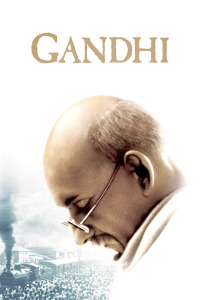
Review of Gandhi (1982) by Abby D — 19 Sep 2009
The film beings with the assassination of Mahatma Gandhi. His funeral is shown where thousands of people gather to mourn his death. The movie flashes back to a young Gandhi. Gandhi, an attorney, is on a train to South Africa.
Here, he experiences his first account of racism because he is an Indian who holds a first class ticket. He is baffled that he is told he must move to third class of he will be thrown off of the train.
Once he reaches his destination, he begins his quest for racial equality. His first arrest occurs because he organizes a peaceful gathering of people to educate them on his intentions and how to achieve them.
He makes a statement by burning passes that all Indians are required to carry. Though he is told he will be arrested for burning the passes, he does so anyway. He sees the passes as what sets Indians apart from the rest of society.
They were signs of racism. Gandhi burns several of them and in return, he is beaten and arrested. Gandhi becomes an incredible speaker, spreading the injustices that Indians suffer. He gains great support from his Indian, Muslim and Hindu people living in South Africa.
He expresses the need to fight, but fight passively. He demands that no one will strike another or kill another though it is likely to happen to them. He is aware of the fate he and others may suffer.
He never loses sight of what needs to be done. He knows that passive protest speaks louder than violence. This movie chronicles protests and movements lead by Mahatma Gandhi in order to bring peace and quality in South Africa.
The struggle that Gandhi and his many supporters experience is well depicted and difficult to watch. There is great suffering endured by the people to achieve what seems like an impossible outcome. Through all of the arrests, criticism, and beatings, Gandhi's vision is finally realized.
Mahatma Gandhi was an incredible person who made his mark in history and will forever be remembered for it. This film related to world religions because he worked hard to change history for the better.
Gandhi lead a passive aggressive movement to abolish "unaccountability" The term "untouchable" was given to the lowest of the caste system that deemed those people as outcasts (99).
This was a stigma that needed to be erased from South African history. Mahatma Gandhi's felt his purpose in life was to encourage an emphasis that the people's strength lay in the awareness of spiritual truth and in the non-violent resistance to oppression (109).
He believed that these characteristics reflected the essence of all religions, including Hinduism, which he considered to be the universal religion. For this reason, Gandhi impacted world religion like no other.
His ideas had meaning not just to Hindu or Muslim people, but to everyone no matter what religion. His words had no limit and are highly regarded today. Mahatma means "Great Soul" and I can think of no other name more suitable.
This review of Gandhi (1982) was written by Abby D on 19 Sep 2009.
Gandhi has generally received very positive reviews.
Was this review helpful?