Review of Frantz (2016) by Oliwia K — 10 Feb 2017
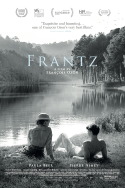
François Ozon has tried almost everything in cinema. Although it seems impossible, the author of "Young & Beautiful" finds a way to amaze viewers with every other film. And it's no different with "Frantz". The newest film by the French filmmaker is, however, something more than just a narcissistic display of creativity. The work by Ozon unveils all its potential only when the peculiar combination of romance and crime, in retro style, turns into an ethical treaty.
In the first scenes, the film introduces a climate of a German town set in the 20's. Beautifully stylized, black and white frames show young Anna (Paula Beer), who arranges the grave of her fiancé, killed in the World War I. Much to the girl's surprise, Frantz' resting place is visited by a misterious man. Having arrived from France, Adrien (Pierre Niney) introduces himself as a friend of the depared and begins to play an even more significant role in Anna's life.
Ozon, in his style, leads the audience by the nose and plays with our guesses, concerning the figure of Adrien. When a viewer is apt to recognise the French as Frantz' lover, the director unpredictably puts us off the scent and suggests that the man travelled to Germany to seduce Anna. The director's artistry consist in that, regardless of the point of view accepted by the audience, the film works excellently as a melodrama about feelings doomed to be unfulfilled.
Although, the film "Frantz" emphasizes its antiquity, it appears to be contemporary through and through. Ozon manages to suggestively depict an atmosphere of distrust, antiphathy towards foreigners and nationalistic increase on the screen. The sequence in which - at the sight of Adrien - frequent visitors of a local inn grab their pints, stand up theatrically and chant a dire song at the top of their voices, holds a hard to extinguish terror. During the screening, it's difficult to resist the impression that this scene, after a few modifications, could have taken place in almost any city nowadays.
Ozon doesn't end at making such a pesymistic diagnosis of surrounding world and finds a way of escape for the characters. Gifted with artistic souls, Anna and Adrien find happiness, when they discover the magic of creativity. The reality that seems oppresive and given once and for all, achieves a status that is negotiable and possible to change. However, in the drawn out play between the characters, where limits of lie are often crossed, the director wouldn't dream of stigmatizing them. In "Frantz" Ozon returns to the thesis, made in "Swimming Pool" and "In the House", which places fiction beyond moral categories. The director has no doubt that - instead of this - in a widely understood art, only emotional credibility and catharsis are the features that count.
"Frantz" remains utterly indebted to classic cinema, as befits a film with potential to spin a tale. The work by Ozon poses as an informal remake of "Broken Lullaby" from 1932 and resurrects the memory about the frogotten picture by Ernst Lubitsch. Simultaneously, the French film seems to have much in common with the work by François Truffaut. Characteristic of "Frantz", sensuality and ability to present an intimate story of a love triangle against a background of broader sociopolitical situation, raise relation to "Jules and Jim". It's high time to admit that Ozon - at times considered just a skillful stylist - directed the film on the level of filmmakers, he so often enthusiastically refers to.
This review of Frantz (2016) was written by Oliwia K on 10 Feb 2017.
Frantz has generally received very positive reviews.
Was this review helpful?