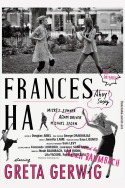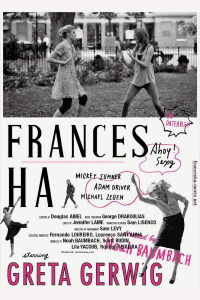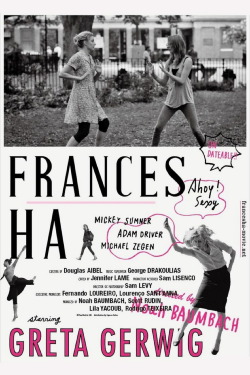
Review of Frances Ha (2013) by Susan S — 29 May 2013
When one thinks of classic New York films, it's impossible to not think of Woody Allen. And when one thinks of Woody Allen, the concept the muse is ever apparent. Most of Allen's films have drawn inspiration from their female counterparts, with those respective muses putting a unique stamp on each film they inhabit.
Noah Baumbach is certainly no stranger to cinematic muses, with his last film, "Greenberg," being co-written by then-wife Jennifer Jason Leigh, who also plays a supporting role. Leigh's character in "Greenberg" -- a scorned and brooding ex-girlfriend -- seems almost a manifestation of the film as a whole, a dark, uncomfortable symbol of insecurity and instability. And while "Greenberg" has beautiful moments of sincerity and sadness, Leigh's ex-girlfriend rendition delivers a perfect 1-2 punch of meta. Baumbach leaves Leigh for Greta Gerwig (co-star of "Greenberg") and the resulting film is one of beauty, transcendence, and utter likeability.
Gerwig's "Frances" was very much her own creation, having co-written the script with now-significant-other Baumbach. Frances is flawed, much like Leigh's Beth character, but what Leigh lacks in sheer honesty and vulnerability Frances makes up for in awkward, child-like joy, a woman-girl who chews with her mouth open, walks like a man, and pulls her clothes from a pile on the floor. She also dances in the streets to David Bowie's "Modern Love," which results in possibly one of my favorite film moments in recent memory.
"Frances Ha" will no doubt benefit from its resemblance to another cultural touchstone, HBO's series "Girls," in which Lena Dunham and her cohorts struggle with similar issues of identity in their 20s while living in the Big Apple. But where "Girls" resorts to melodrama to depict the lifestyles of its stars, "Frances" seem more reminiscent of Lena Dunham's earlier work in the film "Tiny Furniture." The two both cast a sort of meandering net into the worlds of their characters, with little resolution or conflict, instead favoring a slow, intense reflection on the experiences of their female leads, and with the frequent moments of silence, with the camera resonating on their protagonists expressions, offering deeper insight than frivolous emotional outbursts. This is what made Dunham's feature so compelling, and what undoubtedly makes "Frances Ha" an even more exceptional film.
Another aspect of "Frances" that enhances its appeal is that the viewer gets to see this sloppy, "undateable" 20-something blossom and win over her former roommate and friend Sophie (an excellent Mickey Sumner), whose magnified quirks also give hope to the women of the world (self included) who believe that their eccentricities have innate charm.
Luckily for Baumbach and more so Gerwig, Frances has plenty of "magic," a natural charisma that both literally and figuratively demands attention. She is an anti-hero for all women, successful or struggling, who long to exercise their passions and gain love and approval for those qualities that make them inimitable.
This review of Frances Ha (2013) was written by Susan S on 29 May 2013.
Frances Ha has generally received very positive reviews.
Was this review helpful?