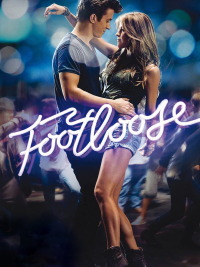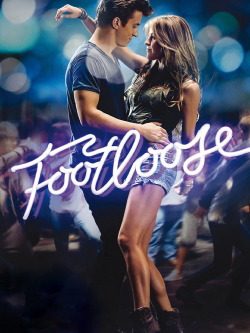
Review of Footloose (2011) by Shiira — 22 Nov 2011
"No one was naked! You mistake yourself, uncle!" Abigail pleads with Reverend Parris, Salem's spiritual leader, who claims to have seen a dress lying on the forest floor, and a girl, he deduces as being the dress' owner, running naked through the wooded area of his province.
"I saw it!" the reverend, tells his niece, rising with anger, when she tries to dismiss the notion from her uncle's head, while Betty, the preacher's unconscious daughter, sleeps amidst the heated words that will dictate the ensuing trajectory of this theocratic hamlet.
What did the preacher really see? Good or evil? We think, good. Alas, in Nicholas Hytner's adaptation of the Arthur Miller play "The Crucible", the disputed incriminating activity that Miller introduces through hearsay, by the author's own volition, now becomes dramatized; we see what Parris sees: the naked girl and the whole nine yards, including an animal sacrifice, in which Abigail the chicken-slayer smears fowl blood all over her face.
We see witchcraft; we see cause for the reverend to be concerned about his parishioners' souls. In the 1952 stage production of "The Crucible", Miller allows the reader to give Abigail the benefit of the doubt.
Her uncle, perhaps, overreacted, since the incident that lands Betty in bed takes place offstage. Even though the spell which Tituba conjures no longer involves the raising of the dead(in the 1997 film, the black slave merely cooks up a love potion), the ceremony still involves violence, and implied sex.
Differing from the stage, and on the page, the moviegoer is less likely to fault the pious man for bringing in outside help. After all, the play loses its objectivity. With our very own eyes, we see witchcraft.
From Parris' point-of-view, we would have to concur that something has to be done about this affront to his Puritanical values, a mindset that is driven by superstition, which makes allowances for the devil's existence in the physical world.
Similarly, in this remake of Herbert Ross' "Footloose", the 1984 critically underrated sort-of musical(what Mickey Ward's sisters would dismiss as "one of those MTV [films]"), the movie needlessly tacks on the backstory, in this case, the four Bomont teens who die in a head-on collision after dancing their asses off at a party where loud music is present(and the decadent temptations that loud music encourages), hence the ban.
For the same reasons as the sequence involving the witchery, unwisely exposed, in "The Crucible", the fatal crash, treated as myth in the original film, and as fabric that smothers Bomont into a cultural revival of the reactionary fifties, also, would be better left unfilmed, because the subsequent actions enforced by the town's spiritual leader seems less like a kneejerk reaction when you see for yourself, the source of the righteous man's horror.
Reverend Moore seems less the fascist than a wrestler, this time around, yet as it turns out, John Lithgow's take on the preacher reveals the same truths about the dance Nazi, with the difference being, the original screenplay withholds the fact that he was a grieving parent(and Ariel, a grieving sibling) until later in the narrative.
This preacher wants to ward off the devil, too. In both versions, Ren McCormack raises hell in this closed-off rural community by blasting "Metal Health(Bang Your Head)" from his car, the same Quiet Riot song used in "The Wrestler" to demonstrate how Randy "The Ram" Robinson lives in the past, just like this remake.
The nostalgia in this "Footloose" is two-fold; it yearns for both the 80s and the 50s, since the original film recalled the ban on rock and roll, just thirty years prior in small-towns like Bomont.
Now sixty years has passed, making the estrangement even greater. How appropriate that the heavy metal classic should happen to be featured in another wrestling picture, wrestling the way that Barton Fink intended, in which the moral scribe pitches a story idea to the studio head about a man wrestling with his soul, a man just like Shaw, who tries to get his daughter's soul into a half-nelson.
Julianne Hough plays Ariel with the same suicidal tendencies, but her predecessor, Lori Singer, not only plays chicken with a train, but makes like Zoe Bell in "Death-Proof", where she changes rides the hard way, as an emerging semi on a two-lane highway nearly turns daddy's little spitfire into roadkill.
She's a wrestler too; she can't decide if life or death is more important. By changing Ren's hometown from Chicago to Boston(just 25 miles from Salem), "Footloose" brings "The Crucible" even closer to Bomont, in which the heavy metal stylings of Quiet Riot becomes analogous to Tituba's Barbados songs.
The Salem girls pretend that they're in communion with the devil, and to a certain extent, it's what Ariel does too, pretending to be a hellraiser, by losing her virginity. By showing the accident, the ban starts to make more sense.
This review of Footloose (2011) was written by Shiira on 22 Nov 2011.
Footloose has generally received mixed reviews.
Was this review helpful?