Review of Femme Fatale (2002) by Dani H — 09 May 2009
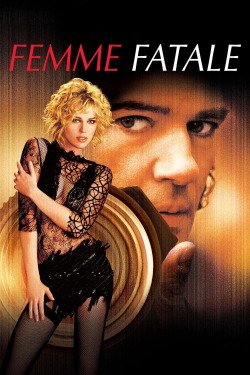
DePalma's Femme Fatale is a love letter to film. DePalma piles on the style with slow-mo, split-screens, steady-cam shots, great angles, sets, costumes and lighting, a plot that twist and turns without ever losing itself, and some fine performances.
However, DePalma's titular character is played by Rebecca Romijn-Stamos, not the most convincing femme fatale. Fortunetly DePalma's script has many scenes that require little or no dialog from her (such as making out with other women, falling through glass, falling asleep in the bath or being observed from afar by Antonio Banderas).
In other scenes DePalma hides her behind a par of large sunglasses and/or a French accent, which improves her performances tenfold. Banderas, on the other hand, really gets a chance to shine and pulls off his character with an entertaining mix of drama, smarts and humor.
At first, Femme Fatale seems little more than a niffty experiment in how far style can propel a film, (If there is any director alive today that could pull of such a film, DePalma is the man for the job) but when the film's major 'twist' is revealed the film turns into something more than just a woman trying to get away with stolen money and her life, but about film, imagination, dreams and the future.
I may be making this film sound deeper than it really is, because it's pretty much a slick excercise in style and, in a way, an experiment in film.
This review of Femme Fatale (2002) was written by Dani H on 09 May 2009.
Femme Fatale has generally received mixed reviews.
Was this review helpful?