Review of Fat City (1972) by Paul Z — 05 Mar 2011
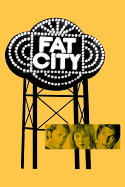
Fat City is something extraordinary, alive with the sort of dialogue that movies ordinarily can't offer, that characterizes time, place, atmosphere, individual, while apparently not progressing. Nobody's ever able to say just what's on their mind or, if they do, to acknowledge it. "Is it my fault that you can't fit in?" shouts Oma at her black lover in the middle of her declarations of love for him in a packed bar. At other times, the characters exchange truisms as earnestly as marriage vows.
For awhile, Huston had been dabbling with movies like he wasn't emotionally invested. Both an extremely realistic glimpse at the basement steps of the fight game and a poignant study of the human situation, this shows us the legendary director working with his time-honored diligence but without resort to either the laughable or sensationalistic props that had seemed to distance the director from his then-recent films, as if to deflect any true feelings. This shrewd, humanist magnum opus is too teeming of soul to be as utterly dismal as it sounds. Negativity and hopefulness are irrelevant to the sympathy articulated in Gardner's screenplay devoid of melodrama or masturbatory philosophizing.
Two men, hardly a decade apart in age, one with a life of meaninglessness ahead of him, one with meaningless life already behind. This is what John Huston has to use in this astutely low-key story of unending loss and he handles it with a horizontal, hard-bitten frankness and makes it into one of his preeminent works. The young man is one of those unflappable, strapping youngsters who appear to be replete with vigor as teenagers. Then you come across them after a couple years and they're clerking a register and daydreaming. The older man was a boxer some time ago, and came close enough to distinction to be troubled by it now as a transient. Huston's muted study of despairing lives and the escape paths people create for themselves, strikingly shot by the great Conrad Hall, sets these men in Stockton and stands the despair of their lives against the single-minded perseverance of their hopefulness.
The Stockton in his film is present in an America we have a propensity to put out of our minds about the more the divide grows between rich and poor. It is the rival of the image favored by boards of trade or business networks. The characters live their lives in discolored flats with screen doors that pound with the current. They interact in the sort of bar that promotes in its window the charge for a shot and a beer. They get it in their blood that they'll need a phenomenon to improve their existence, since they know truly that they don't have potential. So they fantasize, and put confidence in outside chances. Even after all the hours of keeping fit and pump-up sessions, the boxers in Huston's thirtieth film feel little belief in themselves. They exchange big talk for buoyancy.
Huston's boxers are Stacy Keach and Jeff Bridges. Keach plays Tully, whose boxing career is long past, though he extraordinarily pulls himself together for one last conquest. Bridges plays Ernie, who never even has what Tully lost. He does have a sturdy body, some good steps, but mostly he's a sucker. Huston tells his tale in a lingering, moody way, and characters waft into it and remain as they have nothing else to do. There's Oma, a distended lush, who comes by Tully while her lover is doing time. She's thick, loutish and all the other things we suppose about people who never had an education and imbibe cream sherry all day. But she has a spirit, and she trusts in all the immature chestnuts that do her for a viewpoint.
While Bridges' scenes with his girlfriend are stunningly commonplace, the scenes between Keach and Tyrrell are imbued with an enthralling theatrical realism as close to the inimitable dialogue scenes in Cassavetes films as anything I've seen.
Faith is vital to these people since there's nothing else, not even the understanding of faith. Consider Ruben, who oversees the local gym, manages fighters and sponsors sessions when he can. He's aged and penniless and in a fading business, yet when fresh meat drifts into the gym, he gets that old butterfly in the belly. He takes his boxers over to the next town for a fight, and returns them when they've lost, incessantly talking about Madison Square Garden.
The movie's boundaries are teeming with minor, faultless character performances. Candy Clark is defenseless and blankly buoyant as Bridges' young, pregnant wife. She's used some inbred shrewdness to ensnare him into marriage, barely foreseeing what a dismal future she's securing for herself by working him prudently toward a proposal by making him feel like a total clown. Curtis Cokes as Oma's lover has a self-worth that won't submit to distrust. He treats Tully with mano-e-mano respect.
The one performance in the movie I'm certain I will never put behind me comes from Sixto Rodriguez, an actor who doesn't speak one line. He plays a Mexican boxer, who once, momentarily, had repute, and comes in by bus to fight Tully. He comes to the stadium contained by a cosmic stillness and solitude. He pees blood, and we recognize his skeleton in the cupboard. He's in such agony he can hardly stand. But he goes out and fights.
This review of Fat City (1972) was written by Paul Z on 05 Mar 2011.
Fat City has generally received very positive reviews.
Was this review helpful?