Review of Far from Heaven (2002) by Cameron J — 07 Sep 2013
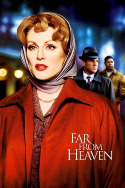
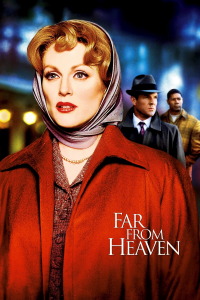
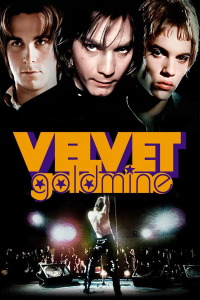
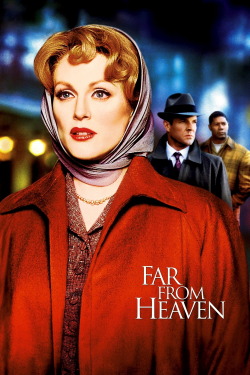
"Save me from this prison, Lord, help me get away, 'cause only you can save me now from this misery, 'cause I've been lost in my own place, and I'm gettin' weary; how far is Heaven?" I'm so, so, so sorry, I'm not even crazy about that song, it's just that I'm watching this film after that song - which is two years younger - was released, so I just could not help myself. Besides, Chicano rock is kind of fitting, because as much as this film is driven by themes dealing with race, gender, sexual orientation and class, we may as well slap in a Mexican ethnicity for good measure. Music should be a major theme also because this stylish period drama about gays' problems, women's problems and Julianne Moore's problems is in more-or-less ever other way the definitive Todd Haynes film, except it actually made its budget back. Huh, and Russell Crowe didn't join this project because he thought that it would be too low-profile, but lo and behold, his bold statement was challenged by this film's shockingly exceeding its outrageous of... $13.5 million. Shoot, I joke, but "Velvet Goldmine" didn't cost but $9 million and didn't even make it to $2 million at the box office, but that was 1998, and this is the 21st century (2001 mind you, but the 21st century nonetheless), where the struggles of the homosexuals are respected enough for us to sit down and embrace film that outline the depths of their hard live... as well as the hard lives of the blacks and women who we keep kissing up to. This is a film for liberals, to be sure, but hey, my conservative self liked it, and yet, it's "far from heaven...ly" (Tee-hee), and for several reasons.
This is certainly a pretty modernist film, but Todd Haynes makes the nifty stylistic choice of marrying contemporary filmmaking sensibilities with sensibilities of films from the late-'50s era in which this drama takes place, and such a move is unique and often effective, but the dark, dirty secret in the film industry is that they weren't exactly making terribly sharp decisions back in the day when it came to filmmaking, so when this effort does anything from presenting distancingly near-amateur fade transitions or overplaying the colorful score, it's hard not to be thrown off, especially when the modern filmmaking sensibilities work their way back in, and not all that organically. The film is kind of uneven in its storytelling style, juggling contemporary and old-fashioned filmmaking sensibilities with off-putting assurance issues that go matched in severity only by inconsistencies in the story itself. It's hard not to appreciate this film's thematic depth, as it is uniquely handled and worthy, but quite frankly, this drama does indeed get pretty carried away with its being packed with so many themes and plot layers, to the point of feeling overblown, or at least as though it has trouble juggling all of its key elements without evading focal unevenness. The film gets to be excessive and inconsistent in its layered storytelling and struggle to flesh out as much as it can, and yet, no matter how much this film wears itself out with depth, there's still something kind of undercooked-feeling about it, as immediate development is lacking, and attention to full dramatic depth has its limited areas, yet there is still more time than there should be that is dedicated to the aforementioned excess material. Haynes will carry this film a long way in a lot of places, and then he'll end up making some questionable move that holds things back, so don't go in expecting this effort to be as realized as something like "I'm Not There" or something, no matter how much it may feel like Haynes wants to carry this vision to that level, due to a palpable sense of ambition that reflects the areas in which Haynes falls short. This is a rewarding drama, but it's not what it could have been, nor is it what Haynes wants it to be, even though he tries so hard to bring effectiveness through the questionable stylistic choices, excessive thematic depth and, in some ways, subtle storytelling that ironically end up holding back Haynes' vision. Nonetheless, Haynes' keeps the film going more than he holds it back, crafting an ultimately very compelling and lavish drama, but not without the help of some fine artistic collaborators.
A bona fide legend in film scoring if there ever was one, the now-late, great Elmer Bernstein was among the definitive film score composers of the 1950s, thus, back in 2002, Todd Haynes summoned Bernstein to this project to compose what would end up being his final score, and by extension, quite the capper to a legendary career, because even though Haynes' plays with the atmosphere of Bernstein's efforts are occasionally cloying, Bernstein's unique and beautiful marriage of subtle modern tastes and good-old fashioned color is both musically outstanding and about as complimentary to the selling of this era as Peter Rogness' art direction. This wouldn't exactly be an effective 1950s homage if the art department didn't put its all into reviving this distinguished era as lavishly as he can, thus Rogness pumps a lot of inspiration into his leading an inspired design team, highlighted by production designer Mark Friedberg and costume designer Sandy Powell, both of whom deliver on mesmerizingly intricate designs that, on top of being immersive, captivate with a loveliness that goes complimented by Edward Lachman's lushly colored and warmly lit cinematography. Visually arresting and musically delightful, this film excels from a stylistic standpoint so much that if you see this effort for no other reason, see it to marvel at its artistic integrity, but don't go in expecting this film to only have artistry going for it, because when it comes to substance, praise is also due, if limited. As I've been saying, storytelling gets to be problematic, whether when it's getting to be uneven in its narrative style, or when it's getting to be overblown with its thematic depth and dramatic layers, but where this story concept could have really thinned out its weight, or even slipped into conventionalism, this compelling narrative, even in concept, is unique and complex on both a thematic level and dramatic level, with worthy messages and a very human core that go brought to life in inspired storytelling. Todd Haynes' score may get to be overblown and uneven, but where this very boastful thematic drama could have gone the way of other dramas of its nature and collapsed into glaring subtlety issues, there's a very sharp and controlled cleverness to Haynes' writing that keeps characterization about as well-rounded as it can be with limited expository depth, and it itself is brought to life by genuine highlights in Haynes' direction, whose heart may get to be too ambitious for you to not notice the shortcomings in this efforts' struggle for excellence, but carries a flavorful thoughtfulness that keeps entertainment value consistent, until broken up by genuine emotional resonance whose effectiveness ranges from gripping to moving. Haynes' inspired offscreen performance as both writer and director builds a very endearing human drama, but what truly brings this character study to life is the onscreen talent, because if nothing else outside of style is consistently strong about this film, it's the performances, particularly those of the leads, with Dennis "The Allstate Guy" Haysbert being thoroughly charismatic as an intellectual black man who challenges the judgment of society, while Dennis Quaid all but steals the show in his emotionally powerful portrayal of a married man who comes to discover dark depths about himself, and leading lady Julianne Moore carries the drama with an effortlessly layered portrayal of an upstanding woman of the community whose flaws and questionable decisions will threaten her with the scorn of her peers and the devastation of a fantasy life. In most every regard, this film is inspired, and that makes the final product's falling just short of considerable strength under the weight of unevenness and overambition all the more frustrating, but the fact of the matter is that there is a lot of heart in this film, and you can challenge such inspiration for only so long before compellingness gets through, entertaining, engaging and ultimately rewarding as a both modernist and old-fashioned drama.
In conclusion, the old-fashioned touches get to be questionable, and don't exactly organically gel with the more contemporaneous touches, as surely as the overwhelming amount of thematic depth and plot layers don't always elude unevenness, or, for that matter, expository limitations, and with these shortcomings going emphasized by a certain sense of ambition, the final product falls short of what it wants to be and perhaps could have been, but through a captivating artistic style that goes built on excellent score work by Elmer Bernstein, immersive art direction by Peter Rogness and lush cinematography by Edward Lachman, as well as through a unique and complex story that goes brought to life by thoughtful writing and direction, and compelling performances, - particularly those by Dennis Haysbert, Dennis Quaid and Julianne Moore - Todd Haynes' "Far From Heaven" is left to stand as an entertaining, when not thoroughly engaging and modern interpretation of questionable relationships during a less modern era.
3/5 - Good.
This review of Far from Heaven (2002) was written by Cameron J on 07 Sep 2013.
Far from Heaven has generally received very positive reviews.
Was this review helpful?