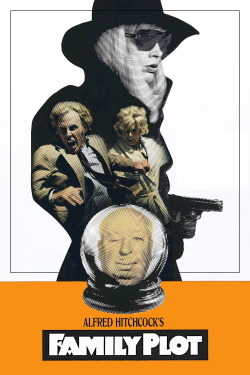
Review of Family Plot (1976) by Rex S — 18 Nov 2005
In preparation of the upcoming "essential hitchcock" series at Film Forum I've been immersing myself in the "Unessential Hitchcock;" the films not included in the Film Forum selection.
I began with Topaz. Despite two marvelous set pieces the film is mostly flat. One wonders if Hitchcock was trying to invert the themes of North By Northwest. Instead of the innocent man plunged down the rabbit hole of international espionage, Topaz features the banal lives of international spies as they deal with the daily routine of being a spy, managing a marriage, family, mistress, etc. If this was Hitchcock's intention, there was a good movie to be made from the material. However, it is only in the typical Hitchcockian that the film comes alive. The hotel Theresa sequence and the silent opening show Hitchcock's brilliance but at this point in his career they are merely exercises, echoes of earlier creative bursts. I was hoping Leonard Maltin's "appreciation" of the film (a bonus feature on the DVD) would open the film up and encourage another viewing. Instead it was more a of an apology that tells us more of Maltin's blind love of Hitchcock then adding to the film itself.
Under Capricorn is, so far as I've seen, the lowest ebb of the Hitchcock ouvre. A faded xerox of Wuthering Heights or Rebecca this is an unsalvagable formulaic mess. Again, even Hitch seems bored with the material. His experiments with long takes seem too be the only way he could manage to maintain an interest in filming this melodrama. One could complain about Michael Wilding's wet fish charisma, the hideous sets, inapropraite music, or lack of proper accents but the less said about this film the better.
Next up was a Stage Fright/The Trouble With Harry double feature. While both films drag at times, they were a pleasant surprise after the earlier dogs. Hitchcock coaxed amazing performances out of the cast of Harry, especially Shirley McClaine and Edmund Gwenn. Harry is a light film but an interesting one. In all these films Hitchcock seems to be subverting the idea that the spine of a film is its story. While Capricorn and Topaz suffer, Harry's lack of plot is a success. It focuses our attention on the characters, their relationships, the beauty of autumnal Vermont and the sounds of Bernard Hermann's haunting and humorous score (his first for Hitchcock).
Stage Fright is an odd choice to consider unessential. Much has been said about the false flashback during the first 15 minutes of the movie. While it alienated audiences in the 50s, 40-50 years later it would be cutting edge mystery filmmaking (see The Usual Suspects). More interesting are the similarities to later Hitchcock. It deals with classic Htichcockian issues of identity, contrasts the motherly with the "feminine mystique," and plays on audience identification. Dietrich is perfect and her brief monologue at the end is endlessly watchable. Why Hitch named his daughters character Chubby Bannister is anyone's guess.
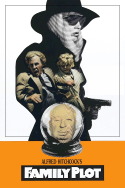
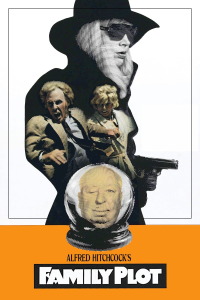
Family Plot is another 'light' film exercising previous Hitchcock themes with new actors and settings. While watching it, the pieces play nicely, but when it's all over you're left a little empty. Again Hitch gets great performances and stages beautiful suspense sequences but the overall emotional impact of his "essential" works is lacking.
This review of Family Plot (1976) was written by Rex S on 18 Nov 2005.
Family Plot has generally received positive reviews.
Was this review helpful?